Security | Threat Detection | Cyberattacks | DevSecOps | Compliance

Log Jammin'- Detecting Log4j 2 RCE Using Splunk

Authors and Contributors: As always, security at Splunk is a family business. Credit to authors and collaborators: Ryan Kovar, Shannon Davis, Marcus LaFerrera, John Stoner, James Brodsky, Dave Herrald, Audra Streetman, Johan Bjerke, Drew Church, Mick Baccio, Lily Lee, Tamara Chacon, Ryan Becwar. If you want just to see how to find detections for the Log4j 2 RCE, skip down to the “detections” sections.

Continuous REST API Testing With CI Fuzz

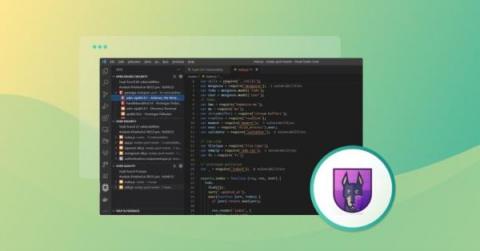
CI Fuzz is a platform for automated security testing that aims to enable developers to ship secure software fast. The platform empowers development teams to automatically deploy continuous REST API security tests with each pull request. Since it enables the instrumentation of entire web service environments, CI Fuzz can create test inputs that are guided by code coverage. This enables it to uncover complex vulnerabilities and edge cases that other tools often overlook.

Developing a risk-based approach to cybersecurity in the hybrid workforce model

The hybrid workforce model is a novel workplace trend that provides employees the freedom to work from their homes while occasionally reporting to their offices. At the onset of the COVID-19 pandemic, organizations all over the world were forced to adopt remote working, or work-from-home, as the new norm. However, as organizations are gradually beginning to accommodate employees in their office spaces, a blended workplace model has become indispensable.

How to Make Your Vulnerability Management Metrics Count

Software development organizations are investing more and more resources in their vulnerability management programs. According to Gartner’s forecast, in 2021 enterprise security spending was expected to break records and grow 12.4% to reach 150.4 billion. But how do organizations know if they’re spending their security resources wisely? The answer can only be found by crunching the numbers.

Responsible disclosure: CodeCov CEO & CTO share learnings from the breach

In January of 2021, CodeCov suffered a supply chain attack that exposed client environment variables. In the following months, the specifics of the breach and its technical applications have been thoroughly examined by the application security community to determine what went wrong and how to combat similar attacks in the future. But another interesting outcome of the breach were the insights into a slightly less glamorous topic: responsible disclosure.

How a Generalized Validation Testing Approach Improves Efficiency, Boosts Outcomes and Streamlines Debugging

In two recent blog posts from the CrowdStrike Software Development Engineers in Test (SDET) team, we explored how end-to-end validation testing and modular testing design could increase the speed and accuracy of the testing lifecycle. In this latest post, we conclude our SDET series with a deep dive on how our generalized validation testing component improves efficiency, enhances product functionality and streamlines troubleshooting.

CTO Michael Bargury's Thoughts on Low-Code Security Featured on Dark Reading

We are proud to have thought leaders at the head of Zenity. Michael Bargury, Zenity co-founder and CTO, recently published an in-depth piece on Dark Reading, one of the most widely read cybersecurity news sites and online communities for cybersecurity professionals. The piece was chosen for Dark Reading’s “The Edge,” a featured section that presents deep dives into cybersecurity issues.

The Cybersecurity Playbook You Need to Run To Mitigate Risk During M&A

Mergers and acquisitions are high-risk endeavors, sometimes with billions of dollars and corporate reputations at stake. But one way to help lessen the danger is by conducting a thorough cybersecurity review during the due diligence process. The consulting and professional services team at Trustwave works closely with firms across the globe undertaking M&A deals of all sizes.

Understanding the Netskope Chrome OS and Chromebook Integration

What comes to mind when you think of security “out-of-the-box?” You’re probably looking for something that will keep users as secure as possible while minimizing implementation friction points to your users. And with ransomware, malware, and phishing threats spreading faster and costing businesses more each year, IT teams must take a full-stack approach to defend against external attacks and internal vulnerabilities, while keeping the business running.