Security | Threat Detection | Cyberattacks | DevSecOps | Compliance

Gold Microneedling: Merging the Fine and Functional for Exquisite Skin Treatment

To practitioners and clientele alike, breakthroughs in skincare technology are always a fascinating aspect of the beauty and wellness world that keeps on changing. One such breakthrough is gold microneedling, a treatment that offers precision with luxury for skin rejuvenation. This non-invasive procedure employs microneedles, which are porous and plated with gold, to enhance skin texture, mitigate wrinkles, and stimulate collagen production.

Boosting Organizational Cyber Defense with the Tanium Connectors for OpenCTI and OpenBAS by Filigran

As part of Tanium’s ongoing partnership with Filigran, provider of open-source cybersecurity solutions, the new Tanium Connector for OpenBAS with the existing Tanium Connector for OpenCTI will help organizations more quickly identify and remediate cyber threats.

KeyScaler 2025: How AI IoT Security Protects Unmanaged Devices

In today’s hyper-connected world, unmanaged IoT devices represent one of the fastest-growing security threats. Research shows that over 50% of IoT devices contain critical vulnerabilities, and one-third of all data breaches now involve an IoT endpoint. Data privacy is a major concern in IoT security, as protecting sensitive information and ensuring confidentiality is essential to prevent attacks and unauthorized access.

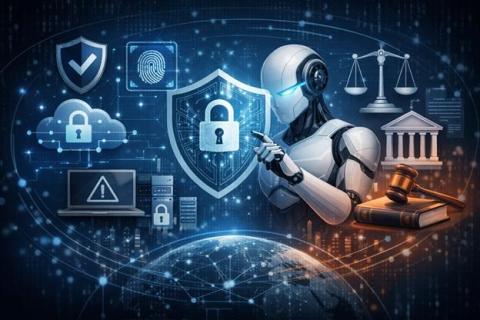
AI Regulations and Frameworks: Preparing for Compliance and Resilience

‍Artificial intelligence (AI) has departed from the realm of science fiction and emerged as a very real, regular part of life, increasing efficiency across a number of everyday activities. Particularly in the marketplace, where process optimization directly equates to time and money, general-purpose AI (GenAI) and other AI systems have rapidly taken on a central role.

Building a Smarter Incident Response Playbook with Deception and Fidelis Elevate

Cybersecurity has become unnecessarily complex. Modern threat actors have refined network infiltration techniques while many organizations continue operating with outdated response methodologies. Traditional security measures are proving insufficient against contemporary attack vectors, particularly advanced persistent threats that operate undetected for extended periods. Security operations centers process thousands of daily alerts, with most representing false positives.

How to Defend Against WormGPT-Driven Phishing and Malware

AI is unlocking new ways to work across industries. Nearly four in five CEOs are implementing or likely to implement generative AI to speed up innovation across their companies, and workers at every level are using GenAI to improve or expand their processes. Unfortunately, they aren’t the only ones embracing the power of AI. WormGPT was one of the best-known early examples of an AI that could create convincing social engineering attacks and build malware.

npm Supply Chain Attack via Open Source maintainer compromise

On Monday, September 8th, a highly regarded open source developer, ~qix, was compromised via a phishing email. ~qix is an author and maintainer behind a large number of popular npm packages and found himself caught by this attack after responding to a message from the email address of support help. This resulted in the attacker taking over his npm account and having access to publish malicious versions of packages to which Qix had privileged access.

Securing Identity in the Age of AI: A Buyer's Guide to Teleport

As enterprises embrace AI, identity has become the defining security challenge. Every new database, Kubernetes cluster, SaaS app, and now every AI agent introduces yet another identity that must be governed and protected. At the same time, attackers are weaponizing AI to accelerate identity-based threats, exploiting fragmentation and credential sprawl to devastating effect.

Five Essential Strategies to Combat Phishing Threats

Phishing threats remain one of the most common and effective attack methods. Research shows it contributes to over 34% of confirmed breaches. The financial impact is significant as well, with credential-related breaches averaging $4.76 million per incident. And despite years of security awareness training, nearly a third of employees still click on simulated phishing emails. Why does phishing work so well? Attackers exploit gaps in visibility, speed, and user behavior.

A Complete Guide to CIS Benchmarks

CIS Benchmarks provide standardized configuration best practices to reduce attack surfaces, strengthen compliance, and support secure operations across servers, endpoints, cloud, and applications. By implementing CIS-certified baselines, organizations can minimize misconfigurations, prevent drift, and improve audit readiness. Netwrix enhances this process with automated configuration monitoring, drift detection, and identity-first enforcement to sustain long-term security.