Security | Threat Detection | Cyberattacks | DevSecOps | Compliance

What is a Third-Party Data Breach?

A data breach is an IT security incident where data is compromised or stolen from a system without the knowledge or authorization of its owner. But what happens when a third party is involved? Stolen data may include sensitive, proprietary, or confidential information such as credit card numbers, trade secrets, customer, or patient data. Third party breaches cost millions of dollars every year to companies of all sizes.


Outpost24 acquires external attack surface management provider Sweepatic to reduce risk exposure of internet facing assets

Outpost24, a leading cybersecurity risk management platform, today announced the acquisition of Sweepatic. Outpost24, a leading cybersecurity risk management platform, today announced the acquisition of Sweepatic. Based in Leuven (BE), Sweepatic is an innovative external attack surface management (EASM) platform. Gartner identified EASM as a top Security and Risk Management (SRM) trend for 2022.

Responding to the Critical MOVEit Transfer Vulnerability (CVE-2023-34362)

On May 31, 2023, Kroll received multiple reports that a zero-day vulnerability in MOVEit Transfer was being actively exploited to gain access to MOVEit servers. Kroll has observed threat actors using this vulnerability to upload a web shell, exfiltrate data and initiate intrusion lifecycles. This vulnerability may also enable a threat actor to move laterally to other areas of the network.

CTI Roundup: Microsoft Finds a macOS Bug That Lets Hackers Bypass SIP Root Restrictions

Improved BlackCat ransomware variant strikes with lightning speed in stealthier attacks, Microsoft finds a macOS bug that lets hackers bypass SIP root restrictions, and Dark Pink hackers continue to target government and military organizations.

Look both ways: Preventing suspicious behavior with end-to-end detections

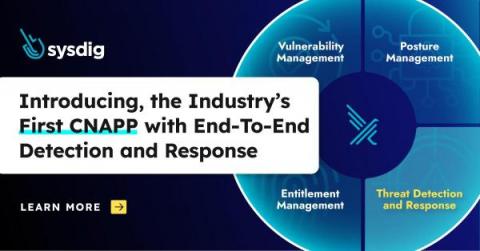
In the rapidly evolving digital landscape, malicious actors constantly adapt their strategies to infiltrate our systems. Traditional endpoint detection mechanisms are no longer sufficient to protect our applications and workloads against advanced threats. To effectively address this concern, it has become imperative to embrace a broader approach to threat detection. This entails a paradigm shift towards incorporating both agent-based and agentless detection methods.

Respond Instantly to Kubernetes Threats with Sysdig Live

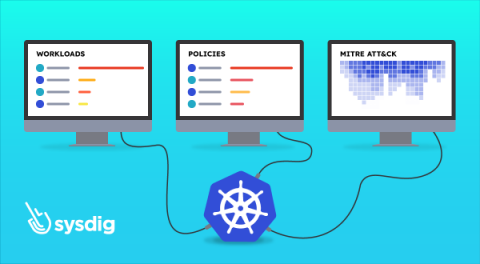
Discover how Sysdig Secure’s new “Kubernetes Live” informs of your Kubernetes security posture at a glance. Investigating a security incident may be a tennis match. Sometimes, you find yourself jumping from one window to another: one place for runtime events, another one for vulnerabilities, another one for logs. Gathering and correlating all the information available can be a time consuming task, but it’s the only way of having a clear view of what is going on.

Sysdig Enriched Process Trees, an Innovative Approach to Threat Detection

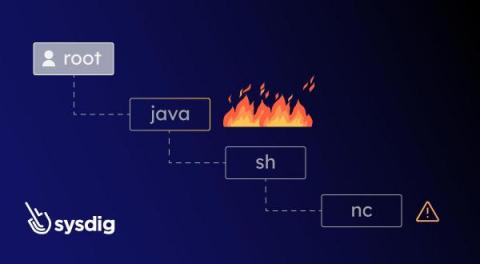
Discover how Sysdig Secure’s new Process Tree feature improves threat investigation. Imagine you’re investigating a security related detection, the investigation was triggered by the execution of stat/etc/shadow in one of your containers. Is this a sign of a legitimate activity, such as a developer debugging an app, or a sign that your container has been compromised? It depends on the context.