Security | Threat Detection | Cyberattacks | DevSecOps | Compliance

OpenClaw: Cato Governance Controls and Sector Exposure Insights from the Cato SASE Platform

Agentic AI does not just answer, it acts. The moment an agent has a reachable control plane, you have effectively created a “remote hands” interface into your environment. In our recent blog post, “When AI Can Act: Governing OpenClaw,” we explained why this shift breaks old security assumptions and why governance must be continuous, enforced, and context-aware rather than a one-time checklist.

Cato Networks Named a SASE Industry Leader and Outperformer for the THIRD Consecutive Year

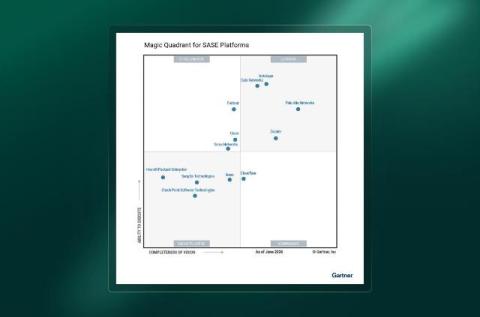
Cato Networks has been named a Leader and Outperformer in the 2026 GigaOm Radar for Secure Access Service Edge (SASE) — marking the third consecutive year we’ve earned this distinction. And, once again, Cato is positioned closest to the center of the Radar, of all participants. In this year’s GigaOm Radar for SASE, Cato is positioned in the Maturity/Platform Play quadrant, reflecting the depth, completeness, and enterprise readiness of the Cato SASE Platform.

Cato CTRL Threat Research: New MongoDB Vulnerability Allows Instant Remote Server Takedown (CVE-2026-25611)

Cato CTRL’s Vitaly Simonovich (senior security researcher) has discovered a new vulnerability (CVE-2026-25611 with a “High” severity rating of 7.5 out of 10) in all MongoDB versions with compression enabled (version 3.4+, enabled by default since version 3.6), including MongoDB Atlas. The vulnerability can enable a threat actor to crash any MongoDB server. MongoDB Atlas clusters are not internet-reachable by default.

From Alerts to Action: Dynamic Prevention

In 2020, the SolarWinds compromise showed how far attackers can go when they look legitimate. Instead of breaking in loudly, threat actors tampered with trusted software updates and gained access that appeared routine to many defenses. The U.S. government later assessed that roughly 18,000 customers installed affected Orion updates, and a smaller subset experienced follow-on intrusion activity, often discovered only after time had passed.

The Post-Quantum Journey Begins: Enforce, See, and Evolve with Quantum-Safe SASE

Encrypted data has a shelf life, and for many organizations it must remain secret for years. The post-quantum risk is not a dramatic collapse of encryption, but a quieter threat: attackers harvesting encrypted traffic today so they can decrypt it in the future. That is why post-quantum readiness is increasingly a board and CEO-level responsibility, with the CISO leading execution, because quantum risk threatens long-term business stability, compliance expectations, and trust.

AI Agents: How Your New Employee Brings More Security Risks

AI agents aren’t applications. They’re employees. So why are we treating them like applications? AI agents don’t behave like classic applications. They access systems. They make decisions. They operate continuously. They interact with humans and other systems without being explicitly triggered each time. That’s not automation. That’s not scripts. That’s a digital worker.

Cato CTRL Threat Research: When OpenClaw, Your AI Personal Assistant, Becomes the Backdoor

Cato CTRL’s Vitaly Simonovich (senior security researcher) has identified a threat actor selling root shell access to a UK-based automation company through a compromised AI personal assistant based on OpenClaw.

Beyond Access: How Cato Measures and Manages User Risk in Real Time

On a quiet Tuesday morning, Jerry, a fictional system administrator, logged in as usual. While testing a new integration script, he visited a documentation page on an unfamiliar domain. It looked harmless and loaded without issue, but behind the scenes, Jerry’s laptop began making a series of small outbound requests to several low-reputation domains. None of these connections were malicious enough to be blocked, yet the pattern resembled early-stage domain-flux activity.

How Cato Turns Identity Noise Into High-Confidence Detections

Jeremy, the Head of IT, thought it was a normal Monday until his help desk was overwhelmed with login complaints. 37 employees couldn’t log in. Password resets were happening that nobody could explain, and some devices seemed to vanish from the identity directory. The worst part was that the identity logs did not show a clear break-in. There was no obvious malware and no dramatic spike, only routine-looking admin activity.

Cato CTRL Threat Research: Foxveil - New Malware Loader Abusing Cloudflare, Discord, and Netlify as Staging Infrastructure

Cato CTRL has identified a previously undocumented malware loader we track as “Foxveil.” We observed evidence that the malware campaign has been active since August 2025, and we observed two distinct variants (v1 and v2). Foxveil behaves like a modern initial-stage loader: it establishes an initial foothold, frustrates analysis, and retrieves next-stage payloads from threat actor-controlled staging hosted on Cloudflare Pages, Netlify, and, in some cases, Discord attachments.