Microsoft engineers shared that 99.9% of compromised accounts forgot to turn on MFA. Despite so many warnings and proof of the efficacy of MFA, an M365 security report by Coreview reveals that 78% of M365 administrators do not have MFA activated. Isn't that crazy? It's not always perfect (phishing, social engineering and password brute-force attacks, device theft etc.); nevertheless, it is clearly better than not having it. However, if not implemented with care, it can create headaches for MSPs.
If we look at the industry report, the Managed Services Market is forecast to touch USD 557.10 billion by 2028. It has become a mature business now, however the customers' needs are highly complex when compared to traditional businesses. MSP Business opportunity/challenges can be complex to navigate, often involving multiple external market forces, internal drivers, organisational and client-based frictions, resistance to scaling, and of course, both financial and opportunity costs.
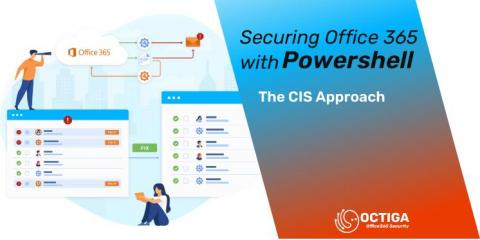
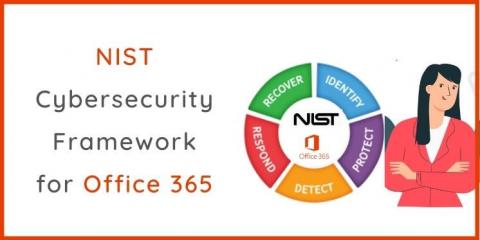
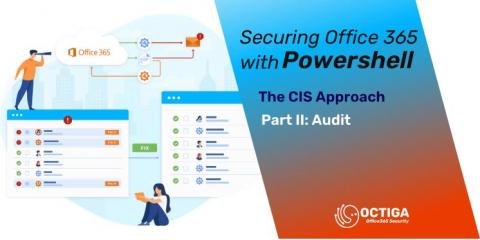
Office 365 is central to your business needs and business continuity. However, it exposes a large (maybe even the largest) risk surface in your organisation. It is, therefore, crucial to secure it enough to mitigate this ever-present and continuous risk but keep it open enough to ensure as fluid a business as possible. Getting this balance right is difficult, and it can be hard to know where to start. Adopting a common security standard can be a great place.
As part of the 2021 MSP 500 project, CRN asked MSPs to describe their most significant challenges for 2021. Their answers ranged from 'finding and hiring highly trained new employees' to 'fulfilling clients' sophisticated IT security needs whilst sustaining business in the saturated MSP market.' In 2021 the cybersecurity threats have taken different shades and have compelled the MSPs to refine and increase their security offering to stay relevant and thriving in the market.
With more than a decade long history of businesses adopting cloud computing, less than one-third of the enterprises have a documented cloud strategy as per Gartner's estimation. Despite the increased migration to cloud security, we discussed the top cloud security risks that security experts are afraid of today.
(Guest Blog) For decades, companies have relied on perimeter protection solutions to restrict their digital resources. These included passwords to authenticate users, intrusion detection systems and firewalls. With time, passwords became inadequate in preventing unauthorized access, and most shifted to two-factor authentication systems like one-time SMS codes or tokens. This change significantly enhanced security, but the approach only focused on securing the perimeter.
(Guest Post) There is no worse feeling than the heartache you get after recording your child’s milestones, only for the mobile phone to start warning that the internal storage is running low. Or maybe you cannot function without music, and you have been downloading so many songs that both your internal storage and memory card are full. Most people would rush to delete some of the songs, but you should not have to decide between two of your favourite artists because you are not one of them.
The global managed security services market was valued at $19.4 billion in 2017 and is forecast to reach $46.1 billion by 2023 at a CAGR of 14.9%. There has been an upward trend seen in the need for threat-intelligence by several sectors today. Due to an increased requirement to fight against the advanced threat landscape, customers today expect managed IT service providers and MSPs to adopt advanced security technologies to detect better and anticipate potential threats well in time.