Security | Threat Detection | Cyberattacks | DevSecOps | Compliance

Featured Post

Why Conventional Disaster Recovery Won't Save You from Ransomware

The conventional formula for maintaining business continuity in the face of unexpected IT disruptions is as follows: Back up your data. Make a recovery plan. Test the recovery plan periodically. That approach may work well enough if your primary concern is defending against risks like server failures or data centre outages caused by natural disasters. But in the present age of widespread ransomware attacks, conventional backup and recovery planning aren't always enough.

How to Integrate NDR Capabilities into a Comprehensive Security Platform

Network security has moved beyond conventional perimeter defenses. Organizations are now faced with more advanced threats requiring advanced detection and response capabilities. With effective Network Detection and Response (NDR), visibility is increased, and your digital environment is protected. This guide shows how to add NDR to your security platform. It covers common challenges and uses automation to boost effectiveness.

Understanding Market Dynamics in Pre-IPO Investment Decisions

Looking to secure your stake at the start of the next major breakthrough? Investments in Pre-IPO companies can deliver significantly larger returns compared to traditional public market investments. The current investment environment has led to unprecedented numbers of retail investors attempting to purchase private company shares before they become publicly available. The appeal is obvious.

What Is Jenkins? Features, Benefits & Core Concepts

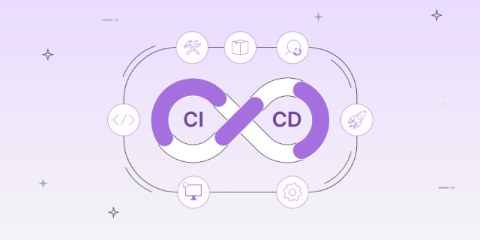
Jenkins is an open-source automation server that is widely used for continuous integration (CI) and continuous delivery (CD) in software development. It is an automated engine that builds, tests, and deploys the application so that development teams can routinely integrate code changes in a way that ensures the software is deployable. Created as the Hudson project in 2004, Jenkins has grown to become an infinitely extensible and customizable tool hosting an enormous ecosystem of plugins.

The Benefits of Shifting Left: Minimize Risk and Save Money with Early Security Integration

Shifting left in security, or integrating security early in the software development lifecycle (SDLC), can help your organization save time and money. By identifying and addressing potential security flaws early, organizations can reduce the likelihood of vulnerabilities being exploited in production applications. This proactive approach is more cost-effective and time-efficient, as it prevents the accumulation of technical debt and minimizes the need for extensive rework or redesign.

SOAR & DSDL: Crossover for Agentic AI Workflow

Recently we released the Splunk App for Data Science and Deep Learning (DSDL) v5.2.0. This update introduced new features for integrating large language models (LLMs) and retrieval-augmented generation (RAG). With DSDL v5.2.0, users can easily perform LLM prompts, vector searches, RAG, and function calling directly from the app's dashboards.

Internal Cybersecurity Risks in Organizations

When most people think of cybersecurity threats, they picture outside attackers trying to breach the network. But often, the biggest risks are already inside. Whether it’s human error, shadow IT, or poor policy enforcement, internal vulnerabilities can be just as damaging. In this blog, we’ll explore five commonly overlooked cybersecurity risks within organizations and how you can proactively address them.

One Click Is All It Takes: The Danger of CSRF Attacks

CSRF attack or Cross-site request forgery is a very dangerous and stealthy web security vulnerability that exploits trust from a user's browser for a web application. A successful CSRF attack deceives an authenticated user into performing some operations without his consent-like account modification or payment or financial transaction against his will. Most alarming in such cases is that CSRF attacks usually remain unknown for end-users that make defending against them difficult.

CVE-2025-32756: Exploitation of Critical Severity Zero-Day Vulnerability in Fortinet FortiVoice

On May 13, 2025, Fortinet published a security advisory on a critical severity stack-based overflow vulnerability, CVE-2025-32756, impacting FortiVoice, FortiCamera, FortiMail, FortiNDR, and FortiRecorder. The vulnerability allows remote unauthenticated threat actors to execute arbitrary code or commands via crafted HTTP requests. In the advisory Fortinet stated that the vulnerability has been exploited in the wild on FortiVoice.

Actions to Take Following the M&S Cyber Attack

In light of the recent disclosure by Marks & Spencer (M&S) regarding a cyber attack that resulted in the theft of customer data, we strongly recommend that if you are affected you take immediate and proactive steps to protect your digital identity and reduce the risk of further compromise.