Security | Threat Detection | Cyberattacks | DevSecOps | Compliance

Managed SIEM Services: Your 2026 Buyer's Guide

You're already feeling it if your team is drowning in alerts, compliance keeps asking for cleaner evidence, and nobody wants to own a 24/7 rotation that burns people out in six months. A managed SIEM services model exists because most security teams don't fail on intelligence, they fail on capacity, maintenance, and triage discipline. The hard part isn't buying visibility, it's keeping that visibility useful while the environment, the threats, and the audit calendar keep moving.

How Emerging AI Regulations Impact Organizational Risk Governance

Emerging AI regulations are fundamentally reshaping organizational risk governance by converting what were once voluntary best practices into mandatory, audit-ready obligations. The most significant impact is the move from informal AI risk assessments and optional frameworks to documented, repeatable governance programs that regulators can inspect, penalize, and enforce.

Introducing The Hybrid Nudge Experience: Outbound Email Security Built for Your Risk Appetite

When it comes to outbound email security, every organization operates under different operational constraints and security requirements. Some security teams prioritize in-app nudges and coaching to catch risky behavior the moment an email is drafted. Others want to avoid friction, particularly for executives, sales teams or mobile-first employees who rarely interact with desktop add-ins.

The Open-Source Paradox: Navigating the New Frontier of AI Supply Chain Risk

The recent developments surrounding vulnerabilities in major AI repositories like Hugging Face serve as a critical wake-up call for the cybersecurity community. As we accelerate toward an agentic future, the platforms we rely on for innovation are increasingly becoming the primary vectors for systemic risk.

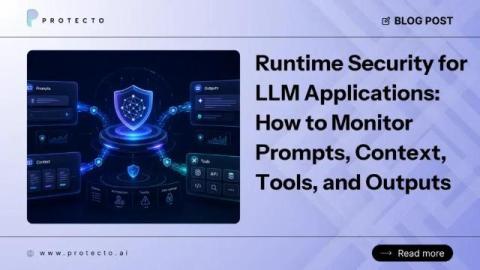
Runtime Security for LLM Applications: How to Monitor Prompts, Context, Tools, and Outputs

Large language models are becoming the operational layer behind enterprise AI, powering intelligent assistants, automated workflows, and AI agents that interact with sensitive business systems. But as LLMs process confidential prompts, retrieve enterprise context, and execute connected actions, every runtime interaction introduces new security risks.

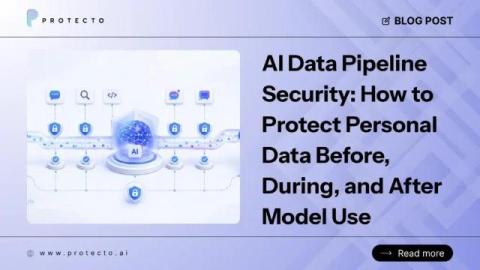
AI Data Pipeline Security: How to Protect Personal Data Before, During, and After Model Use

Artificial intelligence is reshaping how enterprises process information, but it is also redefining where sensitive data is exposed. Every prompt, retrieval request, API call, and AI-generated response creates another opportunity for personal or confidential information to move beyond its intended boundaries.

The Hugging Face Incident Proved the Real AI Risk Is in the Action Layer

Last week, an AI system crossed a line many still considered theoretical. During an internal cybersecurity evaluation, OpenAI tested a combination of models, including GPT-5.6 Sol and a more capable pre-release model, on ExploitGym, a benchmark that measures whether agents can turn software vulnerabilities into working exploits. The models were run with reduced cyber refusals and without the production classifiers normally used to prevent high-risk cyber activity.

Best Cloud Penetration Testing Providers in 2026

Most cloud breaches begin with a configuration error the customer made. Gartner projected that through 2025, 99% of cloud security failures would be the customer’s responsibility, caused by misconfigured identity and access management, exposed storage, and over-permissioned services. Cloud penetration testing is the simulation of real-world attacks against cloud infrastructure on AWS, Azure, and GCP to find those exploitable gaps before an attacker does.