Security | Threat Detection | Cyberattacks | DevSecOps | Compliance

The Billion Dollar Cost of Cybercrime: Lessons from the LockBit Takedown

The recent LockBit group take down has shown the world at large the cost of cybercrime. Initially it was reported that just over $100 million had been gathered through the nefarious acts of this particular group but, as I suspected, that initial figure was just a drop in the ocean. It turns out that the real figure was in excess of $1 billion dollars over the last four years, and I still suspect this may be more.

Why Machine Identities Are Essential Strands in Your Zero Trust Strategy

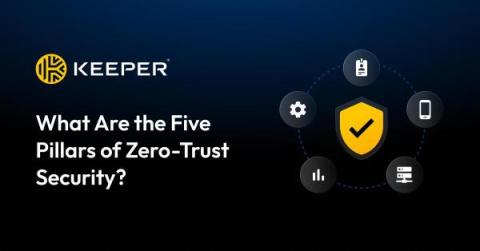
Just like a snagged strand can ruin your garment, overlooking the security of machine identities can tear the very fabric of Zero Trust that protects your organization from bad actors. As a quick refresher, Zero Trust operates on the principle that no entity inside or outside the network perimeter is trusted by default. As we usher in an era where the traditional network perimeter has dissolved due to cloud services, remote work and mobile access, the necessity for Zero Trust becomes even more pronounced.

CrowdStrike and Intel Research Collaborate to Advance Endpoint Security Through AI and NPU Acceleration

At CrowdStrike, we are relentlessly researching and developing new technologies to outpace new and sophisticated threats, track adversaries’ behavior and stop breaches. As today’s adversaries continue to become faster and more advanced, the speed of enterprise detection and response is paramount. It is also a challenge for today’s organizations, which face mounting attack volumes amid a global shortage of cybersecurity practitioners.

Seven Types of Spoofing Attacks and How To Avoid Them

Cybercriminals often use spoofing attacks to disguise themselves as a familiar face or legitimate business to trick people into revealing sensitive information. They use a variety of techniques such as creating fake websites or emails. Some of the different types of spoofing attacks include call spoofing, email spoofing, website spoofing and IP spoofing. Continue reading to learn more about spoofing attacks, the seven common types of spoofing attacks and how to stay protected from them.

Are Biometrics Safer Than Passwords?

Biometrics are technically safer than passwords because they’re harder for cybercriminals to compromise or steal. Besides being more secure, biometrics are also phishing-resistant and more convenient to use than passwords. Read on to learn more about biometrics and why they’re considered to be more secure than passwords.

Monitor network attacks with Google Cloud Armor and Datadog

Network security services like Google Cloud Armor enable you to filter incoming traffic so that you can prevent attacks from overwhelming your system or from reaching critical components of your application. However, these services often handle threats automatically, making it difficult to gain visibility into attempted security breaches.

ChatGPT and the dark web: a dangerous alliance

Artificial intelligence (AI) is now present in almost every aspect of our lives. However, its influence is particularly relevant in the field of cybersecurity, where it impacts both defense and attack. While it has become a great tool to protect an organization's digital assets, it has also been weaponized by cybercriminals to spread and execute increasingly sophisticated and difficult to detect cyberattacks.

Website Security - 10 Effective Website Protection Strategies

In 2023 alone, the global landscape faced a staggering 6.8 billion cyberattacks on websites, underlining the critical need for robust security measures. Banking, finance, and insurance sectors witnessed over 90% bot attacks, while healthcare sites experienced a 100% bot attack rate. These alarming statistics highlight the urgent need for robust website security measures. This blog explores the fundamentals of website protection and best practices to secure your website.

Unveiling Phemedrone Stealer: Threat Analysis and Detections

Recently, the cybersecurity world has been abuzz with discussions about Phemedrone, a newly emerged stealer exploiting the CVE-2023-36025 vulnerability in Microsoft Windows Defender SmartScreen. The project was most recently available on GitHub; however, the project was taken down, and the associated account was removed. Active development still occurs via Telegram.

What is PPP Loan Fraud?

When the pandemic hit in 2020, our world became chaotic overnight. Throughout the nation, individuals were met with layoffs or stringent checks—pushing the financials of families to their breaking points. Simultaneously, business organizations faced similar issues; because fewer bodies were allowed in the same area, production trickled to a minimum, niche clients limited their spending, and small businesses counted the days until their doors closed.