Security | Threat Detection | Cyberattacks | DevSecOps | Compliance

The latest News and Information on Data Security including privacy, protection, and encryption.

How to Stop Data Leaks in Their Tracks

Data leaks are a growing concern for organizations due to the rising volume of sensitive information stored digitally. Leaks occur when sensitive data is inadvertently exposed, and they can easily lead to cyber attacks, reputational damage, and enormous financial costs. The best way to protect against them is to stop them from occurring in the first place. In this blog, we’ll delve into the common causes of leaks and best practices to bolster data security and prevent data leaks effectively. ‍
Key Learnings from the Disney Breach: 5 Ways to Stop Secret Sprawl

Do you have secrets sprawled across your tech stack? The recent Disney breach is as good a reminder as any to check, because it’s likely that you do. But first, let’s take a closer look at the Disney breach to understand what may have gone wrong, and how you can prevent a similar breach from happening to your business.

Nightfall AI vs. Google DLP

In today’s cloud-based work environments, it’s all too easy for assets with sensitive data like PII, PCI, PHI, secrets, and intellectual property (IP) to be sprawled across the enterprise tech stack. With the skyrocketing costs of data breaches, one sprawled secret can cost organizations an average of $4.45 million. This is where Data Leak Prevention (DLP) solutions come in to limit secret sprawl, prevent data leaks, and ensure continuous compliance with leading standards.

One platform, complete protection: why data security is moving on from point solutions

As the world enters the AI Era, CISOs and CIOs are looking at data security with renewed interest and urgency. Instead of multiple overlapping yet disconnected tools, it’s time for one unified platform to trace and secure data wherever it goes.

Protect Against Sensitive Data Loss on GenAI Platforms with Lookout

Explore how Lookout Secure Internet Access protects sensitive data when using generative AI sites. Learn about the risks associated with inadvertently exposing company details or personal information through these platforms, and discover proactive measures to prevent data leaks. Understand how Lookout enables organizations to strike a balance between innovation and security by selectively allowing access to approved generative AI sites. Explore the implementation of data loss prevention rules that identify and block sensitive information from being shared.

Modern data security: why the convergence of DLP and IRM is more effective than the sum of its parts

In the past decade, organizations seeking to protect sensitive data from negligent or malicious insiders faced two choices: invest in a Data Loss Prevention (DLP) product or an Insider Risk Management (IRM) product. These solutions addressed the same problem from different angles. DLP products focused on analyzing data content to control its movement, while IRM products monitored user behavior for risky actions.

Why Dynamic Data Masking (by Itself) Isn't Enough

As more reports of massive data breaches surface, implementing a robust data protection strategy is not an option but a must. Sensitive data must be secure whether it’s in use, in transit, or at rest. No matter where the data is stored or viewed, it must be protected to accomplish National Institute of Standards and Technology requirements and many other regulations. Protecting data, your most sensitive assets is critical.

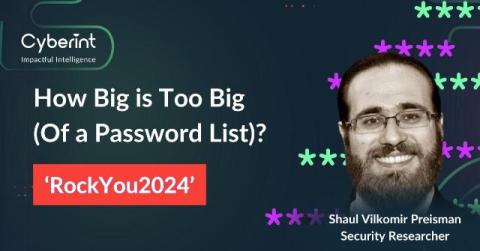
How Big is Too Big (Of a Password List)? An Analysis of the RockYou2024 Password Leak

For both white-hat and black-hat operators, the infamous “RockYou” lists have been a staple of the cyber-security landscape for well over a decade. They are lists of passwords, compiled and repeatedly expanded upon with data leaked over the years to form, in its most recent iteration, a list of approximately 10 billion plain-text passwords.

Essential Considerations When Choosing a DSPM Solution

The advent of cloud technology has revolutionized organizations’ data use and security practices. Cloud development has decentralized data management, with development and DevOps teams — and now business intelligence (BI) and AI teams — dispersing data across multiple cloud service providers, regions and applications. This decentralization has fueled the proliferation of shadow data and heightened the risk of unintentional data exposure.

Defense Supply Chain Data Security

The defense supply chain is a complex network of partners that sell, manufacture, and distribute services or products to defense agencies worldwide. It is made up of both major corporations and smaller sub-suppliers. Each country has its own network of supply chain partners, including manufacturers, software, services and logistics providers that deliver products and services for military materiel applications.