Cloud security isn’t just the vendor’s job– It’s a shared responsibility. Make sure you’re choosing a cloud partner who takes data protection as seriously as you should.
Snowflake is a leading cloud-based data warehousing platform that offers businesses a secure and scalable data storage solution. Offered in a Software-as-a-Service or SaaS model, with its unique security architecture, Snowflake provides robust protection for sensitive data, making it a preferred choice for enterprises dealing with compliance-sensitive workloads.
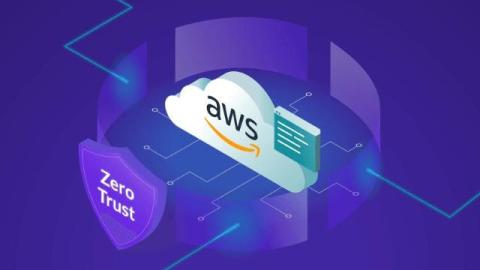
AWS Identity and Access Management (IAM) enables organizations to set up permissions policies for users and workloads that need access to cloud services and resources. But as your cloud environment scales, it can be challenging to create and audit IAM policies that work effectively without compromising security.
Data-handling platforms such as Azure DevOps are often relied on by many different modern organizations, therefore it is important to secure such environments. These widely used platforms simplify DevOps processes like project management and the work of developers. However, there is a downside, the rise of technology brings an increased risk of cyber attacks.
JumpCloud Inc. has opened registration for JumpCloudLand, its first-ever user conference taking place on 28th January 2025. JumpCloudLand is a free virtual event for IT professionals. It offers everything IT teams need to build skills, stay ahead of industry trends, and unlock opportunities for professional and organisational growth. Attendees will have the chance to meet industry leaders, exchange ideas with peers, and discover innovative ways to drive success for their teams and businesses.
Hackers are quickly taking advantage of every vulnerability in an organisation's armoury, particularly exploiting poorly managed identities. An organisation might have the strongest firewalls, encryption, anti-malware, vulnerability scanners, and risk management tools in the world, but if identities are not managed securely, this still leaves one critical gap in its cybersecurity arsenal.
The adoption of cloud technology has transformed how organizations develop, deploy and oversee internal and customer-facing applications. Cloud workloads and services create efficiencies and introduce new access challenges. Multi-cloud environments—where organizations utilize services from multiple cloud solution providers (CSPs) like AWS, Google Cloud and Azure—offer exceptional flexibility and resilience but also present significant security challenges.
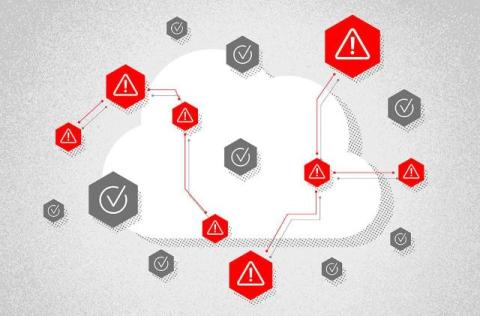
Adversaries often use complex, multi-stage cloud attacks that evade traditional security measures, which struggle to fully visualize, prioritize, and respond to threats. Multi-domain correlation addresses this by analyzing data across diverse domains — including networks, applications, databases, and storage — to uncover potential weaknesses and attack paths across interconnected resources.
Amal Mammadov is a cloud security practitioner and detection engineering specialist whose work sits at the intersection of threat intelligence, cloud-native architecture, and security operations. In this interview, he outlines why most organisations are losing ground despite heavy security investments and what it actually takes to build detection programmes that produce outcomes.