Security | Threat Detection | Cyberattacks | DevSecOps | Compliance

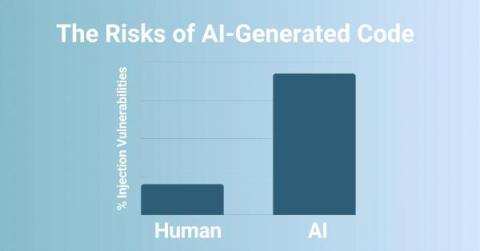
The Risks of AI-Generated Code

AI is fundamentally transforming how we write, test and deploy code. However, AI is not a new phenomenon, as the term was first coined in the 1950s. With the more recent release of ChatGPT, generative AI has taken a huge step forward in delivering this technology to the masses. Especially for development teams, this has enormous potential. Today, AI represents the biggest change since the adoption of cloud computing. However, using it to create code comes with its own risks.

Code Intelligence Finds New Vulnerability in protobufjs: CVE-2023-36665

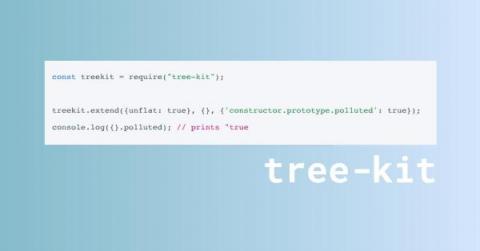
As part of Code Intelligence's ongoing efforts to improve the security of open-source software it continuously tests open-source projects with its JavaScript fuzzing engine, Jazzer.js, in Google's OSS-Fuzz. Recently Code Intelligence uncovered a new Prototype Pollution vulnerability in protobufjs (CVE-2023-36665) using its newly integrated Prototype Pollution bug detector. The vulnerability puts affected applications at risks of remote code execution and denial of service attacks.

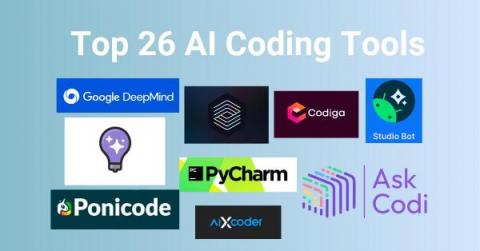
26 AI Code Tools in 2024: Best AI Coding Assistant

Generative AI unleashed a whole series of new innovations and tools to the masses in 2023. From AI chatbots to image generators to AI coding assistants, there is just so much to consider, and there are more and more being launched every day. In this guide, we will look at how AI is changing the world of software development by showcasing 26 AI coding tools that are helping developers produce high-quality software more efficiently.

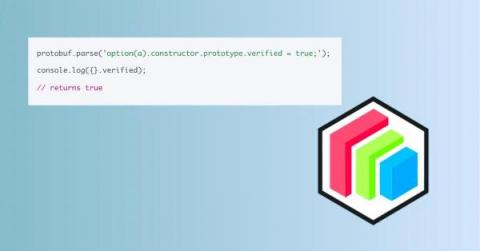
New Vulnerability in protobuf.js: Prototype Pollution - CVE-2023-36665

We have found a new Prototype Pollution vulnerability in protobufjs (CVE-2023-36665). The maintainer of protobufjs has issued an update that fixed the issue on 27 June 2023. The vulnerability was discovered by Peter Samarin using Jazzer.js with our newly integrated Prototype Pollution bug detector. This finding emerged in part from our collaboration with Google's OSS-Fuzz and puts affected applications at risk of remote code execution and denial of service attacks.

The Power of Low-Code/No-Code Development in Changing Application Development Landscape

The landscape of application development is constantly evolving, driven by technological advancements and changing user demands. Over the past few years, we have witnessed the rise of generative AI, the “shift left” approach, and the increasing prominence of low-code/no-code development.

Snyk named a Leader in 2023 Gartner Magic Quadrant for Application Security Testing

We’re thrilled to announce that Snyk has been named a Leader in the 2023 Gartner Magic Quadrant for Application Security Testing! Snyk was named in the Magic Quadrant for Application Security Testing (AST), for the first time, as a Visionary in 2021. And today, we’re excited and honored to announce that Gartner has recognized us in the Leaders Quadrant in the 2023 Magic Quadrant report.

A New Era of AppSec: 10 Times as a Leader in Gartner Magic Quadrant for Application Security Testing

Ten represents the completion of a cycle and the beginning of a new one, as there are ten digits in our base-10 number system. We've scanned nearly 140 trillion lines of code, so we can’t help but pick up on the one and the zero in our exciting announcement. It's the tenth publication of the Gartner® Magic Quadrant™ for Application Security Testing (AST), and we are pleased to announce we are a Leader for the tenth consecutive time.

5 Tips for Functional Testing in Java

Functional testing is a critical aspect of application development, and it plays an essential role in products being built within the Java ecosystem to ensure they meet their functional requirements and work as intended for the end user. As this method of testing is heavily based on validating “functionality” (i.e., “Does this application work the way we intend it to work?”), it is essential to utilize it throughout the development process.