Security | Threat Detection | Cyberattacks | DevSecOps | Compliance

MDM vs. MAM: Which Mobile Management Option Fits Your Business?

Every IT team managing a mobile workforce eventually hits the same fork in the road: do you manage the whole device, or just the apps that matter? That question sits at the heart of the MDM vs. MAM debate. Getting the answer wrong can mean either locking down employee phones so tightly that people revolt, or leaving corporate data exposed on devices you barely control. Mobile Device Management (MDM) and Mobile Application Management (MAM) solve overlapping problems in very different ways.

What Is a Security Token? How Does It Work?

A security token is a physical device, digital object, or software credential that helps verify a user's identity before granting access to a system, application, network, or account. Depending on the type, it can generate a one-time password (OTP), store cryptographic credentials, or work with an authentication system to prove that the person requesting access possesses the authorized token.

Passwordless Authentication and Passkeys: How FIDO2 Enables Secure Login

Password-based authentication is slowly disappearing from the login experience in 2026. Instead, users increasingly authenticate with a fingerprint, device PIN, or security key without typing a password. This is where passwordless authentication and passkeys come in. Built on FIDO2 and WebAuthn, passkeys use cryptographic credentials to make passwordless login simpler for users while reducing exposure to phishing and credential theft. But passkeys are only one part of the picture.

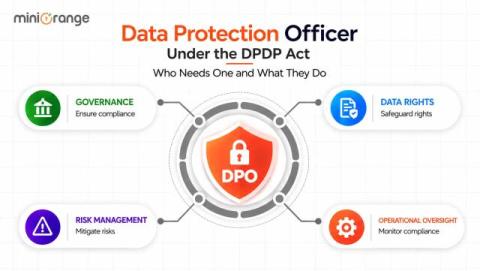
Data Protection Officer Under the DPDP Act: Who Needs One and What They Do

Not every organization that processes personal data has to appoint a Data Protection Officer. Under India's Digital Personal Data Protection Act, 2023, this duty applies only to Significant Data Fiduciaries (SDFs), a category the government assigns based on the scale and sensitivity of the data an entity handles. So before you assume your business needs a data protection officer, it helps to know exactly where this obligation begins and ends.

Cloud Infrastructure Entitlement Management (CIEM): A Complete Guide

In the cloud, an identity is no longer necessarily a person. It can be an application calling an API, a workload accessing storage, a service account running an automated process, or a machine interacting with another cloud resource. Each needs permissions to operate, and each becomes part of an access environment that changes as quickly as the infrastructure itself. This has expanded identity security beyond managing users and accounts to governing a much larger ecosystem of human and non-human access.

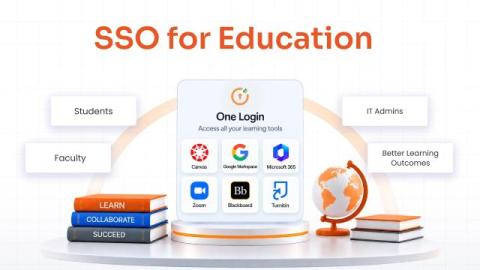
SSO for Education: Secure and Simplify Access to Learning Applications

Students, teachers, and faculty now move across a growing stack of learning, collaboration, communication, and administrative applications. Every new platform can mean another login to remember and another account for IT teams to manage. That creates friction for users and a growing access-management burden for institutions. SSO for education brings these applications behind a central authentication layer, allowing users to access authorized services with one institutional identity.

Just-in-Time Provisioning vs. Just-in-Time Privilege: What's the Difference?

Just-in-Time Provisioning and Just-in-Time Privilege sound almost identical, but they solve different identity management challenges. Let’s say a new software engineer joins your team. They need access to Slack, Jira, GitHub, and other essential apps. Instead of having an IT admin create their account manually, the application creates the account when the employee signs in through your Identity Provider (IdP). That is JIT provisioning.

Identity Lifecycle Management: Process, Stages, Benefits, and Best Practices

Identity lifecycle management is the process of managing a user's digital identity and access from the day they join an organization to the day they leave. It covers account creation, role changes, permission updates, and deprovisioning, and it applies to employees, contractors, service accounts, and increasingly, AI agents. Get it wrong, and you end up with two failure modes: new hires waiting days for access, and former employees who still have it. Both cost money. Only one of them makes headlines.

MFA for Retail: Smarter Authentication for Stores, E-commerce & Employees

A refund is an authentication event, so are a POS login, a loyalty-account change, and a technician connecting to a store remotely. Retailers have traditionally treated these moments as separate access problems, but they share the same underlying question: how much confidence should the business require before allowing an action to proceed?

User Access Management: Process, Controls, and Benefits Explained

Access sprawl is quiet. For example, a contractor's admin rights outlive the project by eight months, or an account sits open for weeks after someone switches teams. And in most cases, nobody catches access sprawl until an audit or a breach forces the question. User access management (UAM) is the discipline that catches this. It decides who gets access to what, why they get it, how that access is approved, how it changes over time, and when it gets pulled.

SSH Session Monitoring: How to Monitor, Record & Audit SSH Sessions

Secure Shell (SSH) gives you direct access to critical servers, databases, and cloud infrastructure. Once a privileged user connects through SSH, they hold extensive control over that system. They can alter core configurations, run terminal scripts, move files, or delete production databases in seconds. If you lack visibility into privileged actions, it can be risky. If a credential gets stolen or an insider goes rogue, traditional firewalls won’t be enough.

How Is AI Transforming Identity and Access Management?

Traditional Identity and Access Management (IAM) relies on authentication methods, predefined roles, and access policies to control who can access business applications and data. These controls remain essential, but they do not always provide enough context to identify unusual behavior or changing access risks. AI in Identity and Access Management (IAM) adds another layer of intelligence by analyzing login context, user behavior, device information, access patterns, and identity activity.

MFA for Telecommunications: Securing Networks, Admins, and Customer Accounts

A single telecom login is one of the most dangerous keys in existence. Behind it sit subscriber identities, billing systems, and the network backbone every other industry depends on. In April 2025, SK Telecom admitted attackers had stolen authentication records tied to its USIM cards, affecting 27 million subscribers, with malware present for years before discovery. Weeks earlier, the FBI warned of a campaign using AI-generated voice and text to trick targets into handing over account access.

What is Identity Governance and Administration (IGA)?

Enterprises today manage thousands of identities across employees, contractors, applications, APIs, and machine-driven systems. In most environments, identities have become the primary security boundary, yet access remains fragmented, overprovisioned, and difficult to track. According to IBM's X-Force Threat Intelligence Index, identity-based attacks now account for nearly one-third of all intrusions, highlighting how identity has become one of the most targeted layers in modern cybersecurity.

What Is SIEM? How It Works With DLP to Detect Data Threats

Most security teams don’t lose the fight against data breaches because they lack tools. They lose because their tools don’t talk to each other. This is exactly the loophole that SIEM and DLP were built to close, together. Security information and event management gives you visibility into what’s happening across your entire environment. At the same time, data loss prevention gives you the control to stop sensitive information from leaving in the first place.

What Is MFA for Air-Gapped Networks? Closing the Last Security Gap in Isolated Systems

Air-gapped networks are supposed to be untouchable. No internet connection, no remote pathway, no way in for an attacker sitting halfway across the world. But ask any security team that has actually run one of these environments, and you'll hear a different story. Air gaps stop remote attacks cold. But they do almost nothing to stop a stolen password, a careless USB stick, or an insider with too much trust and too little oversight. That's the gap, and Multi-Factor Authentication (MFA) is here to fill it.

Session on AirGapped AI - Adopt AI Privately and Securely, AI Trends from Around the World at CyBe

In this session at CyBe AI Summit 2026, NIMHANS Convention Centre in Bengaluru, our Founder & CEO Mr. Anirban Mukherji discussed current AI trends, geopolitical and sovereignty risks tied to frontier LLMs, and practical implementations for India. He addressed how AI-driven automation like delivery robots and drones can disrupt jobs, why governments and defense agencies require air-gapped or on-prem solutions, and how cost and restricted access to frontier models create inequity in AI adoption.

How to Hide the Status Bar and the Notification Bar on Android Devices?

Android devices are designed for flexibility. Employees can check notifications, adjust connectivity, open settings, and move between apps with a few taps. That flexibility works well for personal use, but it can introduce distractions, security gaps, and usability issues when a device is dedicated to business tasks.

Identity Sprawl: Risks, Causes, and Best Practices for Enterprise Identity Management

An employee leaves the company, but their SaaS account remains active. A contractor still has access to a project workspace months after the contract ends. Someone changes departments and keeps permissions from their previous role. Meanwhile, IT is managing identities, human and non-human across multiple directories, cloud platforms, SaaS applications, and third-party tools. Individually, these accounts may seem insignificant.

How Conditional Access Protects Microsoft 365 Apps From Unmanaged Devices

Your sales representative logged into Outlook from a coffee shop laptop that isn't enrolled, isn't encrypted, and hasn't seen a security patch in eight months. Should Microsoft 365 let that sign-in through just because the password was correct? That single question is why conditional access exists. Passwords tell you who someone claims to be. They say nothing about whether the device behind that login is safe to trust with your company's email, SharePoint files, or Teams chats.

Privileged Account and Session Management (PASM) Explained

Privileged accounts have elevated access that can be used to rewrite system configurations, alter sensitive databases, create new admin users, and exfiltrate confidential customer data. This makes them attractive targets for attackers and risky when poorly managed. Basic passwords and network firewalls aren’t enough to protect them. You need to monitor them continuously. This is where Privileged Account and Session Management (PASM) becomes essential.

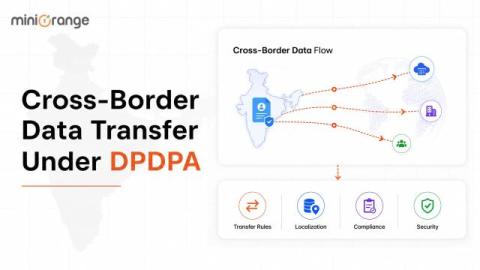
Cross-Border Data Transfer Under India's DPDPA

Businesses operating across countries routinely move personal data between India and overseas systems. Customer information may be stored by a global cloud provider, employee records may be accessed by an international headquarters, or an Indian business may use SaaS platforms whose infrastructure is located outside the country.

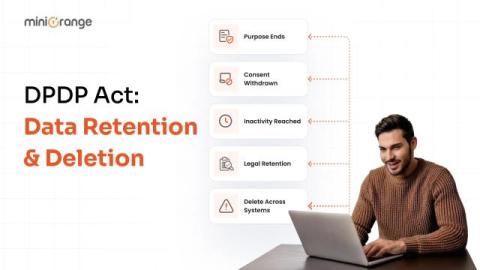
Data Retention Policy Under the DPDP Act: How Long You Can Keep Data and When to Delete It

How long should an organization keep personal data? Under the DPDP Act, the answer is not simply one year, three years, or any other fixed period. The right retention period depends on why the data was collected, whether that purpose still exists, and whether another law requires the organization to keep it.

What Are the Best Plugins for Implementing SSO on WordPress?

Two-factor authentication (2FA) gives your WordPress login an extra verification step beyond the password. If someone gets hold of a password, they still need the second factor to access the account. This makes 2FA particularly useful for administrators, editors, store managers, members, and other users with access to important site functions. The right 2FA plugin depends on your site, user base, and the level of control you need over 2FA.