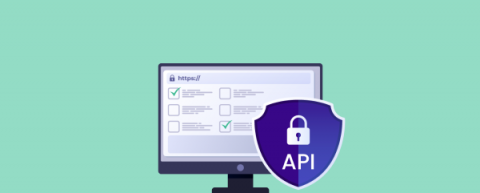
Securing REST APIs is particularly difficult since they are highly interconnected and not designed for manual access. To save time and be more efficient, many developers rely on testing solutions that can automatically detect REST API endpoints and test parameter properties within them. In this article, I want to provide an overview of the 6 biggest challenges of REST API security testing and how test automation can help resolve them.
An application programming interface, or API, is a defined process that allows data to be shared between applications or programs. Each API consists of a set of rules that dictates how communication occurs between a client and a server or external program. The required request format, the authentication process, and the encryption of data all have set guidelines so that the API knows what information to share and when and how to share it.
With a threat landscape expanding at an accelerated pace, it is next to impossible for any organization to even keep track of and monitor the volume, frequency, complexity, and breadth of the attack techniques and tactics out there. But to effectively tackle threats and protect mission-critical assets, the knowledge of these common attack techniques, tactics, detection, and mitigation is critical. This is where MITRE ATT&CK is especially useful.
Remote Desktop Protocol (RDP) is a protocol developed by Microsoft which at its core is designed to give users a graphical interface to a remote Windows computer over a network connection. The remote Windows machine runs an RDP server, while the local computer accessing it runs an RDP client. Windows comes bundled with Microsoft's Remote Desktop Connection to easily access Windows hosts over RDP.
APIs have become a vital part of doing business. Organizations increasingly rely on the use of APIs for day-to-day workflows, particularly as cloud applications become something of a mainstay. A recent report found that the average number of APIs per company increased by 221% in 2021. Not only are APIs impossible to ignore, but the need to invest in API security cannot be overlooked. The trend in usage is closely followed by opportunists seeking ways to exploit vulnerabilities for their gain.
APIs are a critical component of today’s development landscape because of their importance in microservices. Since modern software is often composed of various microservices, certain functionalities may be beyond the scope of an individual API. With an API gateway, we can aggregate those services to behave as if they were a single API, and return complex responses from disparate microservices through a single call to an API gateway.
Almost a year ago, Gartner predicted that API attacks would be the most frequent enterprise attack vector in 2022. Strengthening API security is more critical today than ever and must be at the core of cybersecurity strategy to prevent API exploitation. To make matters worse, the lack of API visibility weakens core security principles. More organizations don’t have an accurate inventory of APIs, and it is not surprising for 30% of APIs to be unknown.
A Google remote procedure call (gRPC) is Google’s open source version of the remote procedure call (RPC) framework. It’s a communication protocol leveraging HTTP/2 and protocol buffer (protobuf) technologies. gRPC enables a remote client or server to communicate with another server by simply calling the receiving server’s function as if it were local. This makes communicating and transferring large data sets between client and server much easier in distributed systems.