Security | Threat Detection | Cyberattacks | DevSecOps | Compliance

How Reach Security Automates Remediation and Prevents Configuration Drift

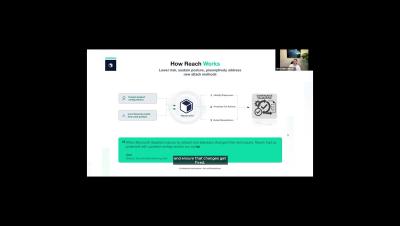
From identification to remediation to drift management. When Reach flags an exposure, it doesn’t stop there. It shows exactly how much risk you’ll reduce by fixing it — and what impact it’ll have on users. In this short demo, CRO Jared Phipps walks through how Reach:︎ Quantifies residual risk reduction (e.g., 62%, 91%, etc.)︎ Weighs that against user impact︎ Guides teams through the remediation process︎ Integrates with Jira or other ticketing systems to track fixes︎ Monitors configurations to prevent drift and maintain baselines.

Predict and Prevent: How AI is Changing Insider Risk Management

Insider risk has become one of the most urgent and financially consequential cybersecurity challenges for today’s organizations. Insider Risk is a top concern for the C-Suite and Boards, and organizations must be prepared to detect and respond to insider risks. In fact, according to IBM’s Insider Threat Report, 83% of organizations reported at least one insider-related security incident in 2024 (IBM, Insider Threat Report, 2024).

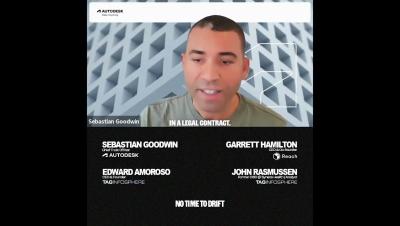
"Trust in AI Starts with Transparency | Sebastian Goodwin (Autodesk) x Reach Security"

Trust in AI starts with transparency. In our recent conversation, “No Time to Drift,” Sebastian Goodwin, Chief Trust Officer at Autodesk, shares how his team is putting that principle into practice — by creating AI Transparency Cards. Think of them like nutrition labels for AI: clear, consistent, and designed to help customers understand what’s inside. Each one outlines what the model does, how it’s trained, safeguards in place, and more.

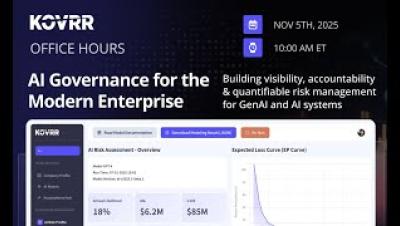
How Responsible AI Governance Strengthens Cybersecurity Defenses

Here's something that should keep you up at night: cybercrime might cost the global economy $10.5 trillion every year by 2025. That's not a typo. Traditional security measures? They're already struggling to keep pace. Attackers have figured out how to weaponize artificial intelligence, launching sophisticated campaigns that waltz right past conventional defenses like they're invisible.

Seven Bibliography Mistakes SparkDoc Catches, Plus How to Keep Them Out of Your Drafts

Good writing can wobble at the finish line when the references go wrong. Reviewers notice. Teachers notice. Readers who care about sources notice first of all. Bibliography mistakes do not only weaken credibility, they slow down the whole process because every small error leads to another round of checking. This guide looks at the errors that appear again and again, plus how an AI-aware workflow reduces them without turning the page into a sales pitch. The goal is a clean, verifiable bibliography that supports the argument rather than distracts from it.

Reach Security Recognized as a CRN® 2025 Stellar Startup!

Reach Security announces that CRN , a brand of The Channel Company, has included Reach Security on its 2025 Stellar Startups list in the Security category. This prestigious list highlights fast-rising technology vendors that are driving innovation and fostering growth in the IT channel with groundbreaking products.

AI Browsers Are Silently Exfiltrating Sensitive Data - and Legacy DLP Can't See It

A new class of AI-powered browsers are rewriting the rules of data security. While CISOs focus on traditional vectors, employees are unknowingly creating permanent backdoors to your most sensitive data through browsers that remember everything, sync everywhere, and share it all with AI models. The bottom line: If you're not actively protecting against AI browser exfiltration, you're already leaking data. Here's why it's happening, what it costs, and how to stop it today.

Detectify AI-Researcher Alfred gets smarter with threat actor intelligence

Six months after launch, Alfred, the AI Agent that autonomously builds security tests, has revolutionized our workflow. Alfred has delivered over 450 validated tests against high-priority threats (average CVSS 8.5) with 70% requiring zero manual adjustment, allowing our human security researchers to concentrate on more complex, high-impact issues. Now, we’re elevating Alfred’s capabilities by integrating real-world threat actor intelligence directly into its core system.