Security | Threat Detection | Cyberattacks | DevSecOps | Compliance

How to Modernize Access Control for Cloud Applications with Or Weis

Building Modern Access Control for Cloud Applications Join us in this livestream with Permit.io CEO Or Weis as we cover what it means to build modern access controls for cloud applications. Many companies these days find themselves having to reimplement access-controls over and over; therefore, in this episode we discuss solutions, the 5 best practices and open-source tools that can be used. Didn't catch the live stream? Ask all of your Snyk questions and we’ll do our very best to answer them in the comment section.

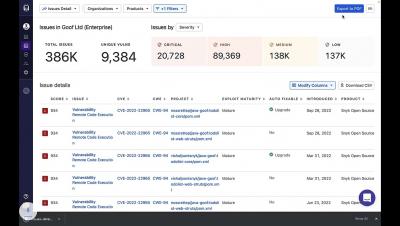
Introduction to Snyk's revamped reporting

A short overview of Snyk's new and revamped reporting capabilities, providing the visibility needed to hold data-based conversations between development and security. Key new capabilities include the addition of Snyk Code data, improved user experience and performance, new filtering and data sorting, and new sharing options. Snyk helps software-driven businesses develop fast and stay secure. Continuously find and fix vulnerabilities for npm, Maven, NuGet, RubyGems, PyPI and more.

CVE-2022-27510: Citrix Gateway and Citrix ADC Critical Authentication Bypass Vulnerability, along with CVE-2022-27513 & CVE-2022-27516

On November 8th, 2022, Citrix disclosed a critical authentication bypass (CVE-2022-27510), a remote desktop takeover (CVE-2022-27513), and a user login brute force protection functionality bypass (CVE-2022-27516) vulnerability affecting several versions of Citrix ADC and Citrix Gateway. This bulletin only applies to customer-managed Citrix ADC and Citrix Gateway appliances as Citrix-managed cloud services are not affected. A threat actor could leverage these vulnerabilities in specific circumstances.

Denial Of Service vulnerabilities

A denial of service attack is a type of network attack in which an attacker makes the system, machine, or network unavailable to the intended users. There are various types of DOS attacks, like, for instance, a user is trying to reach a webpage but the page redirects the user to another URL or even the user can’t reach its destination i.e. access is blocked. In this article we will discuss.

JFrog's security scanners discovered thousands of publicly exposed API tokens - and they're active! The Full Report

Note: This report was previously published in InfoWorld When developing the recently announced JFrog Advanced Security, our Research team decided to try out its new “Secrets Detection” feature. Our goal was to test our vulnerability detection on as much real world data as possible, to make sure we eliminate false positives and catch any bugs in our code.

Supply chain integrity, transparency and trust is now firmly on the agenda

Supply chain risk continues to make headlines, from Solarwinds and Kaseya to last week’s announcement of a patch for the OpenSSL vulnerability, and the latest cybersecurity review from the U.K.’s National Cyber Security Centre highlights the serious threats posed by supply chain attacks.

Secure Coding in C and C++ Using Fuzz Testing

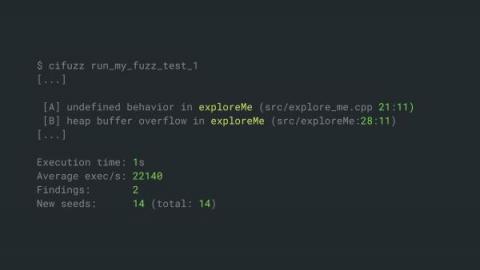
Today, I would like to show you to a simplified fuzz testing approach that enables secure coding of C and C++ applications. If you read this article to the end, you will learn about an automated security testing approach for C/C++ that can protect your applications against all sorts of memory corruptions and other common C/C++ vulnerabilities.