Spending for software-as-a-service (SaaS) applications is projected to grow 17.9% to $197 billion in 2023, then grow another 17.7% to $232 billion in 2024. This rapid growth is being fueled by several factors including the desire to modernize IT environments and enable hybrid workers, who might login from a branch office one day and a hotel room the next.
ThreatQuotient’s Perspective on Security Operations and vision for AI in the ThreatQ Platform We’re all familiar with the “speed of cybersecurity”, the rapid pace at which cyber threats evolve and the corresponding need for timely and agile defense measures. We’ve been trained to understand the importance of quickly detecting, analyzing, and mitigating cyber risks to stay ahead of attackers and protect assets in an increasingly dynamic and interconnected world.
Coming to iOS later this week and available today on macOS, Windows, Linux, and Android, manage invites, guests, and more – all directly from the 1Password app.
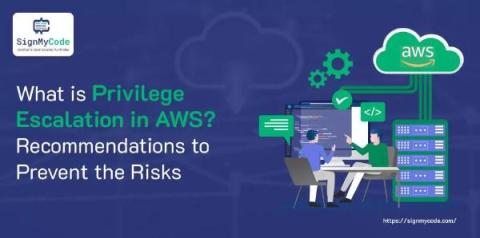
Implementing the principle of least privilege at scale in AWS requires careful planning and a systematic approach. Here are some steps to help you achieve this.
GraphQL has become a popular choice for building APIs in recent years. In projects using Typescript and Apollo Client, such as Rubrik’s, it is very helpful to map GraphQL schema to types and interfaces and one of the most popular tools for generating these types and interfaces based on a GraphQL schema is Apollo Codegen.
In today's rapidly evolving cloud landscape, managing permissions and ensuring robust security controls are essential for organizations utilizing Amazon Web Services (AWS). AWS Identity and Access Management (IAM) is crucial in managing permissions to access AWS resources. While IAM provides granular control over permissions, AWS IAM permissions boundaries offer additional security and flexibility for fine-tuning access controls.
Generative AI capabilities continue to make their way into every organization, with increasingly useful ways of helping employees and contractors be more productive. This includes advancing how fully automated vulnerability remediation works, and with the power of generative AI, is able to take into account unique environments and uses in real-time.