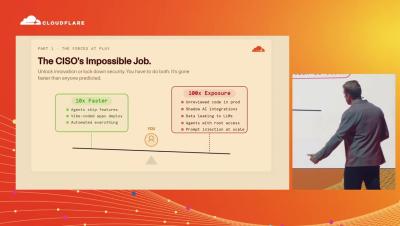
Michael Gustafsson of Cloudflare shows how to ship AI agents on Cloudflare that are secure by default, so teams can build and deploy agents with confidence.
Jose Dores of Cloudflare explains how programmable SASE gives organizations the fastest path to adopting AI safely, with security built for what comes next.
An AI agent can summarize, classify, and move customer data in seconds. An activity log can tell you what happened, but not why a person set it in motion. Teramind AI Usage Control connects the human action to the AI tool, the data involved, and the behavior that follows, across devices, apps, and workflows. With Teramind, security and IT teams can.
In February, Let’s Encrypt announced that DNS-PERSIST-01 was coming, “some time in Q2 2026.” It’s October, and it’s nowhere close to ready. We’ve been waiting for DNS-PERSIST-01 since January, along with every other ACME client and lots of organizations. DNS-PERSIST-01 promised to simplify domain validation and make automation easier, but we had to wait on Let’s Encrypt. Let’s Encrypt is waiting on a redesign, a standards body, and maybe one more vote.
An outage is normally modeled as deferred revenue. Production stops, orders wait, operations resume and some of the backlog is recovered by running longer. Where the inventory perishes, none of that applies. The stock is destroyed during the incident, restoring the systems does not bring it back, and running longer afterward produces new product rather than recovering the old.
Compliance content answers the question of when an obligation starts. For the serious incident reporting duty in the AI Act, the honest answer is that it is disputed, and the dispute is not a failure of research. Two readings of the text point in different directions, neither is obviously wrong, and no authority has resolved it. What follows is the reasoning on both sides and what to do without picking one.
Co-founder & CCO LimaCharlie Email Security is generally available today. It protects Microsoft 365 and Google Workspace mailboxes from inside the same tenant, permission model, and data lake as the rest of LimaCharlie. A phishing email and the endpoint activity it causes can now be detected, investigated, and remediated in one place.
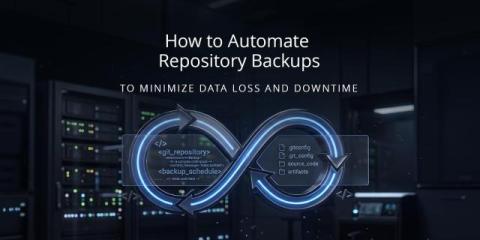
In modern CI/CD pipelines, source code moves fast, and repository state changes constantly. Manual backups are inherently fragmented, error-prone, and incapable of capturing platform metadata at scale. To prevent critical data loss and ensure rapid failover, engineering teams must automate their repository backups.
Attackers are continually finding new ways to refine business email compromise (BEC) attacks, according to Douglas McKee, Director of Vulnerability Intelligence at Rapid7. When attackers compromise trusted tools and accounts, they can manipulate victims’ view of reality. One way attackers can achieve this is through what McKee calls “calendar warfare,” in which attackers use calendar meetings to trick users into falling for attacks.