Trustwave security and engineering teams are on heightened alert and are actively monitoring malicious cyber activity associated with and adjacent to the escalating military conflict between Russia and Ukraine. Trustwave is working closely with its clients around the world to enhance cyber preparedness during this time.
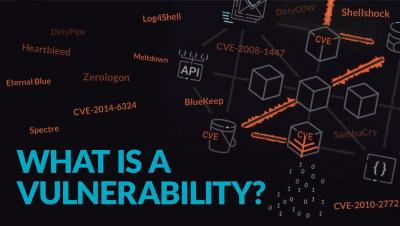
The job for CIOs, CISOs and their security and IT teams may be more complex than ever in 2022. Ongoing support for hybrid workforces, coupled with the continued shift to the cloud, has expanded the threat surface. At the same time, the infrastructure and environments supporting organizations are growing ever more vulnerable. According to the National Institute of Standards and Technology (NIST), more than 18,000 vulnerabilities were reported in 2021.
Migrating to the cloud has allowed many organizations to reduce costs, innovate faster and deliver business results more effectively. However, as businesses expand their cloud investments, they must adapt their security strategies to stay one step ahead of threats that target their expanded environment. Managing, securing and having visibility across endpoints, networks and workloads is not an easy feat. It requires a unified defense-in-depth approach.
The rise of cloud native and containerization, along with the automation of the CI/CD pipeline, introduced fundamental changes to existing application development, deployment, and security paradigms. Because cloud native is so different from traditional architectures, both in how workloads are developed and how they need to be secured, there is a need to rethink our approach to security in these environments.
Digital transformation puts all industries at greater risk of cyber attacks, and the healthcare industry is no exception. As US healthcare organizations increase their reliance on health information technology for purposes such as data sharing, process automation, and system interoperability, their attack surface expands rapidly. This rapidly multiplying number of attack vectors increases cybersecurity risk considerably.
Cyber threat intelligence (CTI) considers the full context of a cyber threat to inform the design of highly-targeted defensive actions. CTI combines multiple factors, including the motivations of cybercriminals and Indicators of Compromise (IOC), to help security teams understand and prepare for the challenges of an anticipated cyber threat.