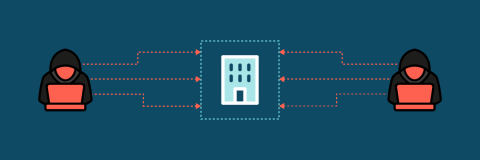
What do ambulances in the UK, the Norwegian government, and a major Russian bank have in common? They were all victims of successful supply chain attacks in July 2023. Could you be next? It’s more likely than you think. Organizations entrust more sensitive data to vendors and third parties (like government agencies and critical infrastructure operators) than ever as part of their software development and operations.
In today’s cloud-driven landscape, containerized workloads are at the heart of modern applications, driving agility, scalability, and innovation. However, as these workloads become increasingly distributed across multi-cluster, multi-cloud, and hybrid environments, the challenge of securing them grows exponentially. Traditional network security measures designed for static network boundaries are ill-suited for the dynamic nature of containerized applications.
Data. Breach. We see these two words all the time in the news, on social media, and in company emails notifying us that our information might have been affected.
Cloud infrastructures can comprise thousands of interconnected and dynamic resources. This complexity introduces unique challenges to monitoring and securing these architectures. Understanding where user activity originates—and what actions constitute security threats—is a complex task when you’re dealing with the huge volume of logs, metrics, and other telemetry that highly distributed cloud environments generate each day.
In modern web applications, cross-origin resource sharing (CORS) enables secure communication between applications hosted on different origins. Developers use CORS to access other applications’ services within their own. This approach eliminates the need to rewrite features from scratch, accelerating development time and improving the developer experience.