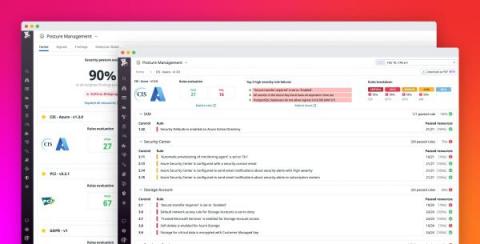
I recently caught up with Phil Guimond, Principal Cloud Security Architect at ViacomCBS. He describes his role as a fancy way of saying he likes to be involved in All The Things™. This includes cloud security and architecture, application security, penetration testing, and digital forensics and incident response, and even vendor reviews and risk management from time to time. He works in a very cross-functional team. We had a great discussion, and I wanted to share it with all of you.
Penetration testing is a common technique used to analyze the security posture of IT infrastructure. Web application penetration testing can assist you in identifying the potential security weaknesses in your web-based applications so that they can be fixed before attackers exploit them.
The following is an excerpt from Netskope’s recent book Designing a SASE Architecture for Dummies. This is the seventh, and final, in a series of seven posts detailing a set of incremental steps for implementing a well-functioning SASE architecture.
Cybersecurity has a bad rap for getting in the way of business. Many CIOs & CISOs dedicate a lot of time to minimizing security solutions’ performance drag on their network traffic while ensuring that the solutions continue to do their job keeping the network secure. The move to the cloud exacerbates this challenge.
Container orchestration platform Kubernetes announced in December 2020 that its third and final release, Kubernetes v1.20, would deprecate dockershim and subsequently Docker as a container runtime. This deprecation has brought multiple changes that admins must be aware of and accordingly respond to.