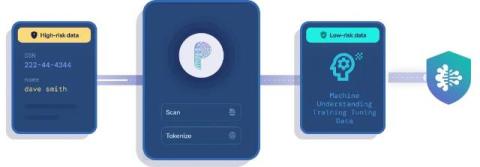
AI is transforming industries—but at what cost to privacy? This clip explores how companies use personal and medical data and why transparency is crucial. Do we still have control over our information?
While many organizations focus on mitigating external cyber threats, insider threats can target privileged accounts with elevated access to sensitive data or systems. Based on Cybersecurity Insiders’ Insider Threat Report, 83% of organizations suffered at least one insider attack in 2024.
In today’s digital landscape, network failures and data breaches are not just technical headaches or concerns for CISOs only, they can trigger major legal consequences. Regulatory agencies are sharpening their focus on cybersecurity, and class-action lawsuits, hefty fines, and reputational damage are real risks. For legal teams and boards, ensuring compliance, conducting robust due diligence, and being ready for litigation is not optional; it is a must.
DNS is the backbone of the internet, translating domain names into IP addresses to facilitate communication between devices. However, cybercriminals exploit DNS to create covert channels for data exfiltration and command-and-control (C2) operations using DNS tunneling. This technique allows attackers to bypass security measures by disguising malicious traffic as legitimate DNS queries. As DNS-based attacks continue to rise, securing DNS traffic has become a priority for organizations worldwide.
Digital forensics methodology is a scientific approach that uncovers and interprets electronic data while you retain control of its integrity for legal proceedings. This systematic process of digital forensics helps reconstruct criminal events with scientific precision by identifying, collecting, and analyzing digital information. The methodology follows a well-laid-out framework that confirms evidence authenticity and admissibility in court.
In November 2024, I participated in SCinet with the Network Security team at SC24. My job was supporting Corelight sensors and threat hunting using the data the sensors produced. This engagement allowed for a very constructive comparison between the networking challenges at SC and Black Hat USA, where I had the honor of working in the Network Operations Center (NOC) a few months earlier. At SC, I felt immersed in the cutting-edge world of research computing with people showcasing the fastest everything.
Don’t wait until your data is compromised—be proactive. Listen, most cyberattacks don’t start with an obvious warning. There’s no flashing red alert, no system shutdown—just subtle anomalies that seem harmless at first. But those small details? They’re Indicators of Compromise—signs that an attacker may already be inside your network.
Filmed at CISO Sydney 2024 by AZK Media, this exclusive conversation with Amelia Gowa, Trustwave’s NSW State Director, explores the key cybersecurity challenges facing organizations today. In this interview, Amelia shares her insights on: The evolving threat landscape in 2025 How AI, IoT, and cloud are reshaping cybersecurity risks The impact of third-party dependencies and shadow IT Why a proactive, intelligence-led security strategy is essential.
AIDA (Artificial Intelligence Defense Agents) is an AI-native suite of agents that supercharges your approach to human risk management. It leverages multiple AI technologies to create personalized, adaptive, and highly effective training for all of your users that actually changes behavior. By automating template generation, training, and reporting, AIDA reduces the administrative burden on your security teams so they can focus on protecting your network.
Organizations across nearly every industry have become reliant on third-party relationships to accomplish their business operations. You’d be hard-pressed to find an organization that doesn’t partner with at least one third-party vendor. However, this growing reliance on vendors has also created an evolving threat landscape—vendors are now prime targets for cyberattacks.