Security | Threat Detection | Cyberattacks | DevSecOps | Compliance

The Role of SCA in Software Security: The Software Composition Analysis Complete Guide

Software composition analysis is a type of security testing that identifies the open-source and third-party components used in modern software. Historically, most applications were built entirely in-house. Today, however, with the widespread use of package managers, cloud-native development, and reusable code, developers rely heavily on external libraries and modules. In fact, open-source code makes up as much as 70–90% of the codebase for a single app.

Agentic AI Ransomware Is On Its Way

Agentic AI-enabled ransomware is not here yet, but likely will be very soon. I am talking this year or by 2026. Here is why. What is Agentic AI? First, it helps to define what agentic AI is. To do that, we have to start by defining what Artificial Intelligence (AI) is…and doing that is a bit like trying to nail the proverbial Jello to a wall.

Email-based Attacks Accounted for Most Cyber Insurance Claims Last Year

Business email compromise (BEC) attacks and funds transfer fraud (FTF) accounted for 60% of cyber insurance claims in 2024, according to a new report from Coalition. “Business email compromise is an event in which cyber criminals gain access to an organization’s email account to execute a cyber attack,” the cyber insurance provider explains. “Attackers often leverage email access to find sensitive data, including login credentials, financials, and other private information.

KnowBe4 Leads the Charge Against Cybersecurity Threats with Unmatched AI Capabilities

When it comes to artificial intelligence (AI) and human risk management (HRM), not all AI is created equal. You need an approach to AI that demonstrably enhances your security posture, integrates seamlessly with your existing processes and operates as an extension of your team. AI should be in service of a larger goal rather than exist for its own sake.. We’re talking benefits, not just features. An established history of innovation, not capabilities that are too little, too late.

Optimizing Deception Breadcrumbs for Endpoint Security Effectiveness

Cyberattacks don’t kick down the front door anymore. They sneak in quietly, move laterally, and wait for the right moment to strike. And as endpoint environments become more distributed and dynamic, relying solely on traditional security layers is no longer enough. Organizations need more than just visibility. They need deception technology.

Top 7 Fidelis Elevate Integrations You Need to Know

In today’s dynamic cybersecurity landscape, disconnected tools result in fragmented visibility, slower response, and higher risk. To stay ahead of threats, organizations need a connected defense architecture—where tools talk to each other, act intelligently, and minimize analyst fatigue. That’s exactly what Fidelis Elevate integrations are designed to do.

Securing Critical Infrastructure: GitGuardian Partners with ONE-ISAC to Protect Oil & Natural Energy Operations

This collaboration brings GitGuardian's expertise in secrets detection and non-human identity protection to the oil and natural energy sector, addressing unique challenges in operational technology environments.

Detection as Code with Falcon Next-Gen SIEM

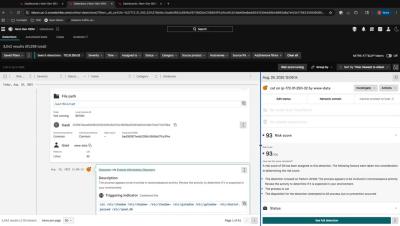
Speed and precision are critical in stopping modern threats. Falcon Next-Gen SIEM brings Detection as Code to the forefront, allowing security teams to version, test, and deploy detection rules with confidence. With powerful API integrations and CI/CD pipeline support, teams can automate rule management, reduce manual errors, and respond to threats faster. Every rule is version-controlled, making it easy to track changes, roll back updates, and scale detection efforts across the organization.