Security | Threat Detection | Cyberattacks | DevSecOps | Compliance

Best Software Composition Analysis (SCA) Tools: Top Solutions in 2026

Software Composition Analysis (SCA) tools expose the risks in open source dependencies by identifying vulnerabilities, outdated dependencies, and license issues in your codebase. Top solutions include Mend.io (best for automated remediation and proactive SCA), Sonatype Lifecycle (known for enterprise policy management), Snyk (known for developer experience), and Checkmarx SCA (known for comprehensive coverage).

Complete Guide to Patch-in-Place SCA Remediation

A definitive guide to how automated and human-reviewed patch-in-place remediation solves both direct and transitive open source vulnerabilities - without forcing risky upgrades. Learn why traditional tools miss transitive risk, and how to evaluate modern platforms based on SLA, provenance, and CI/CD fit.

Preventing SCA Findings From Becoming a Remediation Bottleneck

SCA tools often generate multiple CVEs for the same dependency, creating unnecessary tickets and slowing remediation. Aggregating those findings into a single fix helps AppSec teams reduce ticket sprawl and align security work with how developers actually resolve vulnerabilities.

Best Software Composition Analysis Providers: Top 5 in 2026

Major software composition analysis (SCA) providers include Mend, Black Duck (Synopsys), and Veracode. They offer solutions to find, manage, and fix vulnerabilities and license issues in open-source components, with options ranging from developer-focused tools to enterprise-grade platforms with SBOM generation and deep compliance features.

SCA Everywhere: Scan and Fix Open-Source Dependencies in Your IDE

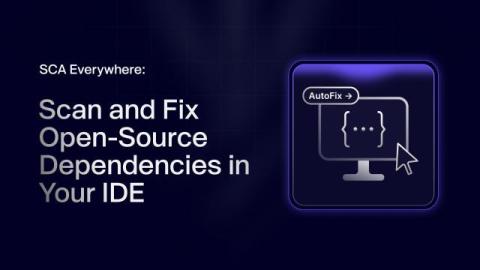
Dependency issues are easiest to address when they show up directly in the development workflow. With this release, we’re bringing the full SCA workflow into the Aikido IDE extension, combining in-editor scanning with the ability to apply safe upgrades through AutoFix. Developers can detect vulnerable packages and resolve them without switching tools or breaking focus.

Using LLMs to filter out false positives from static code analysis

Static application security testing (SAST) is foundational to modern application and code security programs. Yet these tools inevitably produce false positives that require manual review. When scanners find vulnerabilities that are not genuine issues, they erode trust, slow down remediation, and make it harder for teams to understand which alerts require attention.

Static Code Analysis: The Complete Guide to Getting Started with SCA

Static code analysis wasn’t always built into the development process. That means most bugs were detected during testing, after the code was already merged and deployed. By that point, fixing issues was time-consuming, expensive, and risky. Small mistakes slipped into production. Security gaps widened and quality suffered. Static analysis shifts all of that left by bringing security and quality checks into the earliest stages of development.

From Code Commit to Secure Deploy: SCM Code Scanning Best Practices with Veracode

In today’s fast-moving world of cloud-native development and CI/CD pipelines, code flows from commit to production faster than ever. And with that speed comes risk. That’s why code scanning in SCM (Source Code Management) has become a critical part of modern DevSecOps. Veracode’s new SCM Integration makes it easy to secure applications from the very first commit, directly within the SCM, without disrupting developer workflows.

Using Mean Time to Resolve (MTTR) Effectively Across Static and SCA Findings

Customers that have embraced DevOps often ask me for the best metrics to measure their program. I always advocate focusing on policy compliance as the number one metric for understanding your risk, as this provides a succinct measurement of the security of your applications. However, if you are looking to measure and motivate development teams, policy compliance doesn’t give you the granularity to introduce gamification or incentives.