
Security | Threat Detection | Cyberattacks | DevSecOps | Compliance

Website Vulnerability Scanners: How They Work and Boost Security

Website vulnerability scanners enable organizations to continuously identify vulnerabilities by crawling the website and its diverse parts, including web pages, third-party components, and software. It simulates attack techniques to detect weaknesses such as: These tools are essential in modern DevSecOps and continuous security testing environments, helping identify flaws early in the development or deployment lifecycle.

How Automated Vulnerability Scanners Can Improve Your Threat Detection

Web applications are central to how modern businesses operate, driving customer engagement, managing critical workflows, and enabling seamless digital experiences. But as applications become more dynamic and distributed, their attack surfaces grow more complex, and harder to defend. According to the 2025 Verizon Data Breach Investigations Report, 20% of confirmed breaches began with the exploitation of known vulnerabilities, a 34% increase over the previous year.

9 Must-Have WAF Features to Protect SaaS Applications in 2025

The Software-as-a-Service (SaaS) industry continues its explosive growth, fundamentally transforming how businesses operate worldwide. As of 2024, more than 30,000 SaaS providers serve a global base of over 14 billion SaaS users, delivering mission-critical solutions across CRM, HR, finance, collaboration, and a wide range of specialized enterprise functions, placing SaaS at the core of digital transformation.

How to Decode Your Vulnerability Assessment Report for Real Security Gaps

A vulnerability assessment report is more than a technical document. It is a strategic blueprint for improving your organization’s security posture and reducing risks. When interpreted correctly, it empowers organizations to make informed security decisions, prioritize investments, and demonstrate ROI. Yet in many organizations, these reports are underused. They are treated as compliance artifacts or raw checklists rather than insights for strategic action.

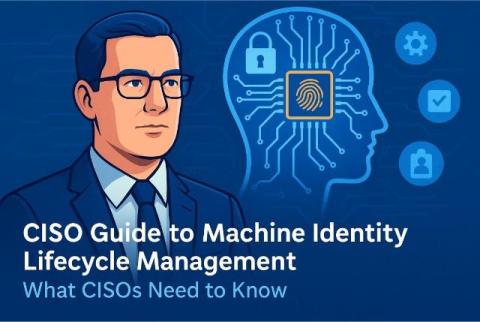
CISO Guide to Machine Identity Lifecycle Management: What CISOs Need to Know

Machine identity lifecycle management has evolved beyond a technical implementation challenge to become a fundamental component of enterprise risk management and digital transformation strategy. As a core element of a modern cybersecurity strategy, machine identity management ensures that organizations can effectively protect their digital assets and adapt to evolving threats.

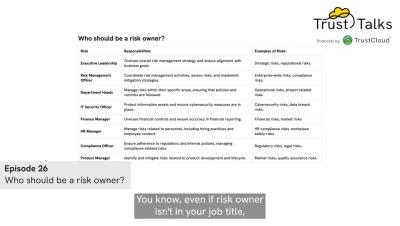
Who should be a risk owner? | TrustTalks - Ep 26 | Security and GRC Podcast

This podcast focuses on the roles and responsibilities of risk owners within an organisation’s risk management framework. It outlines key responsibilities, required skills and qualifications for effective risk ownership, and provides examples of who might fill this role (e.g., executive leadership, department heads).

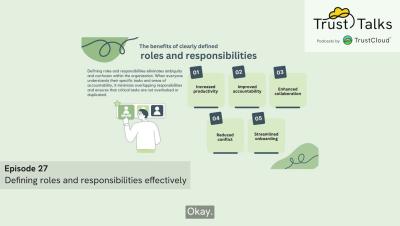
Defining roles and responsibilities effectively | TrustTalks - Ep 27 | Security and GRC Podcast

This podcast focuses on the importance of clearly defined roles and responsibilities for enhanced organisational efficiency, accountability, and collaboration, offering practical steps and tools for implementation. It showcases TrustCloud resources, including training materials, forums, and a GRC Launchpad offering numerous guides on governance, risk, and compliance (GRC), security, and privacy topics focusing on improving organisational effectiveness through better structure and understanding of GRC principles.

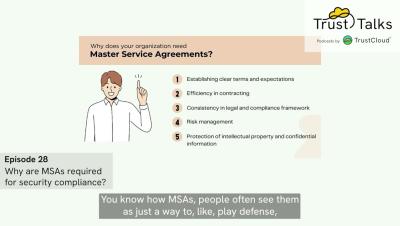
Why are MSAs required for security compliance? | TrustTalks - Ep 28 | Security and GRC Podcast

This podcast focuses on Master Service Agreements (MSAs) and their importance for security compliance, explaining their components, benefits, and use in mitigating risks. It is a comprehensive guide and resource hub for navigating GRC and achieving compliance.

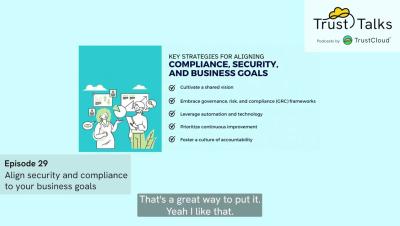
Align security and compliance to your business goals | TrustTalks - Ep 29 | Security and GRC Podcast

This podcast focuses on aligning business goals with compliance and security. It details strategies for successful alignment, including using GRC frameworks, automation, and continuous improvement. Numerous best practices and case studies illustrate how to integrate these elements effectively, ultimately fostering a culture of accountability and enhancing organisational success. Tools and resources are also highlighted to support this integration. The pursuit of success is a multifaceted endeavour.

Top Hackintosh Laptops - EFI Ready & Tested Support

Are you looking for a laptop that can run macOS smoothly? If you're a developer, student, or just love using macOS, building a Hackintosh lets you enjoy Apple's system on a non-Apple laptop. But not all laptops work well with macOS. That's why we tested many laptops and created ready-to-use EFI folders with full support. In this guide, we'll show you some of the best-tested laptops from HP, Lenovo, Dell, and MSI that can run macOS from High Sierra to Sequoia, depending on the EFI.