Security | Threat Detection | Cyberattacks | DevSecOps | Compliance

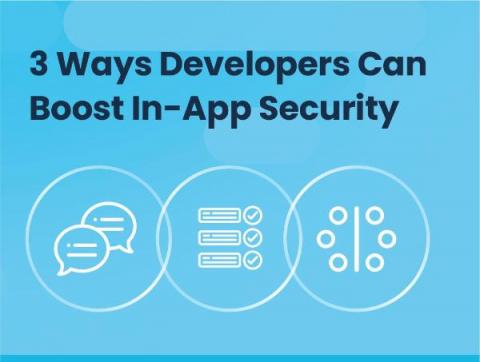
3 Ways Developers Can Boost In-App Security

In the past, responsibility for data privacy and security fell on non-development teams, like IT, security or compliance. But this is changing. Thanks to the adoption of cloud native technologies and trends like policy-as-code, developers are more focused on security than ever. According to the Styra 2022 Cloud-Native Alignment Report, over half of developers think their organization should enhance its data privacy efforts in the next 12 months.
Three Benefits Authorization Brings to your Identity Strategy

Organizations today are embracing cloud-native technologies to increase time-to-market, scalability and cost savings. A big part of the cloud-native transition is moving legacy systems and architectures to the cloud. With this comes both complexity and new risks because modern applications are often composed of dozens of microservices, housed in containers and hosted on immutable, dynamically scaling platforms like Kubernetes.

Learn Microservice Authorization on Styra Academy

Styra Academy, our online training portal for free courses on OPA, Rego, and Styra Declarative Authorization Service, has a new course available - Microservice Authorization! Before diving in, let’s get a better understanding of microservices and some of the authorization challenges developers need to consider. Microservices are everywhere — and securing them presents a unique set of challenges.

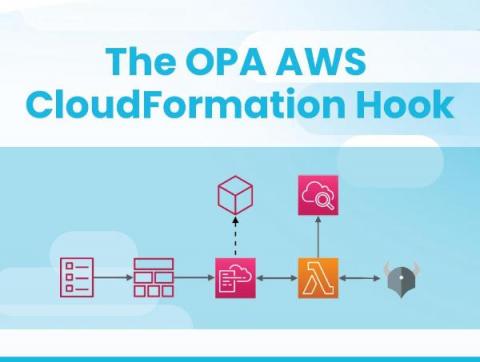
The OPA AWS CloudFormation Hook

With a history spanning more than a decade, AWS CloudFormation has been the tool of choice for many organizations moving their cloud deployments from “point and click” configuration and towards managing infrastructure as code (IaC). As a mature technology, CloudFormation has spawned an ecosystem of tools, documentation and examples around the stack — whatever one is trying to accomplish in this space, chances are good they’ll find relevant resources on the topic.

The Cloud Expansion Checklist: How to Get IT Decision-Makers and Developers on the Same Page

Cloud-native and open-source technologies are booming. But for a successful cloud expansion, IT decision-makers and developers need to be in agreement despite their unique roles in the process. As more enterprises transition to cloud-native environments, the big question is how aligned are IT decision-makers and developers?

Debunking the Top 3 Cloud-Native Security Myths

By 2023, over 500 million digital apps and services will be developed and deployed using cloud native approaches. To put that in perspective, more applications will be developed on the cloud in a four-year period (2019-2023) than the total number of apps produced in the past 40 years. Clearly, organizations are buying into the cloud. But the question is: Do they fully understand it? And do they know how to secure the applications they built within it?

Insights from the Styra 2022 Cloud-Native Alignment Report

IT leaders have historically managed all infrastructure decisions across storage, network, compute and other aspects of the cloud. But this isn’t necessarily the case today. As organizations move away from on-premise cloud infrastructure and adopt cloud-native technologies, modern developers are playing a larger role in decision-making — especially when it comes to policy decisions like the control of cloud-based tools and the code that runs on them.

Moving Your Healthcare Organization to the Cloud? Here's What You Need to Know First

While the last two years accelerated digital transformation across a wide range of industries, this has been a long time coming for healthcare. Healthcare has been undergoing a massive shift to improve security, streamline operations, and enhance the patient experience—and much of that shift centers around the movement to the cloud. Cloud-native ostensibly offers a better, more accessible user experience marked by enhanced uptime, reliability, and efficiency.

Entitlements: Architecting Authorization

By its general purpose nature, Open Policy Agent (OPA) allows for a unified way of dealing with policy across a wide range of use cases. One particularly interesting use case for OPA, and one which will be the focus of this series of blogs, is that of application authorization (or entitlements, or simply, authorization).