Security | Threat Detection | Cyberattacks | DevSecOps | Compliance

The Microservices Advantage: Building Resilient and Agile SaaS Applications

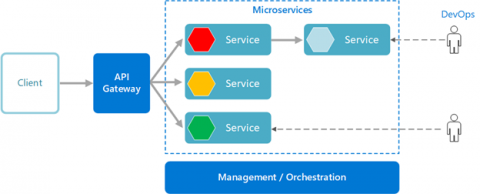
In today's fast-paced digital environment, businesses need software solutions that are adaptable, scalable, and resilient. For SaaS (Software as a Service) applications, the architecture behind the product plays a crucial role in delivering these qualities. One approach that has gained significant traction is the microservices architecture - a method that structures an application as a collection of loosely coupled, independently deployable services.

The Rise of APIs: Data Integration & Microservices #APIGrowth #Microservices #DataIntegration

APIs are growing exponentially due to data integration and microservices architecture, but this expansion increases security risks. As companies scale, so does the API attack surface. Learn how to secure your APIs in an era of rapid growth.

How to secure microservices in a Zero-Trust environment

Microservices architecture is a convenient way to silo different software services compared to traditional software architecture and design. However, with multiple microservices communicating amongst each other - the attack surface of the network is greatly increased. The security of such a system depends on the security of all the services. Any deviation in the system’s security ultimately undermines the integrity of the entire network.

Mapping vulnerabilities to microservices with Snyk and OpsLevel

John Laban is the Founder & CEO at OpsLevel. This blog post originally appeared on the OpsLevel blog. Snyk is rapidly becoming the de facto standard for businesses that want to build security into their continuous software development processes. And with their developer-first tooling and best-in-class security intelligence, it’s no surprise.

Snyk Container meets Cloud Native Buildpacks: Cloud Native Application Security the right way

So you’re running microservices in containers? Congratulations! This is an important step towards meeting those business needs around delivering applications to the hands of your customers as soon as possible. But how can we mitigate any potential risks associated with faster software deployment? Simple, with Snyk.

Sponsored Post

When Dominoes Fall: Microservices and Distributed Systems need intelligent dataops and AI/ML to stand up tall

As soon as the ITOps technician is ready to grab a cup of coffee, a zing comes along as an alert. Cling after zing, the technician has to respond to so many alerts leading to fatigue. The question is why can’t systems be smart enough to predict bugs and fix them before sending an alert to them. And, imagine what happens when these ITOps personnel have to work with a complex and hybrid cloud of IT systems and applications. They will dive into alert fatigue.