Security | Threat Detection | Cyberattacks | DevSecOps | Compliance

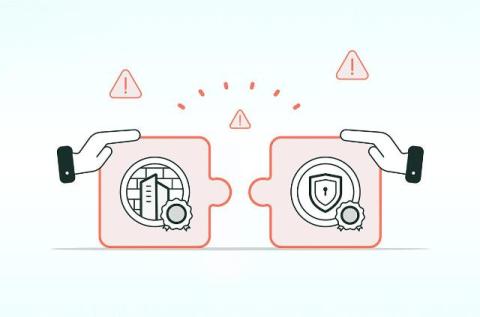
12 WAF Myths Debunked - What You Really Need to Know

Web Application Firewalls (WAFs) play an important role in protecting websites and applications from common threats. But despite their growing adoption, WAFs are often surrounded by myths and misunderstandings that can lead to ineffective implementation or underutilization. In this blog, we debunk the most common myths about WAFs and reveal the truth behind what they can and cannot do.

SOAR on Azure Now Available

The market-leading momentum of our partnership and ongoing engineering roadmap with Microsoft continues! Splunk Security Orchestration, Automation and Response (SOAR) is now available as a native SaaS solution on Azure, enabling customers to even further improve their security posture and create greater digital resilience. Splunk SOAR on Azure acts as the efficiency engine for SOC analysts by connecting Azure services and third-party tools, automating workflows and tasks, and speeding response times.

6 Must-Have WAF Features Insurance Companies Need in 2025

The insurance sector is in the middle of a cybersecurity storm. In 2024, Indusface analyzed over 495 million attacks targeting insurance websites and APIs. The findings were alarming: attackers are no longer spraying and praying; they’re precise, persistent, and increasingly automated. Here’s what the data showed: Insurance companies, which handle high volumes of personal and financial data, cannot afford security gaps.

Homograph attacks: How hackers exploit look-alike domains

Several years ago, a security researcher discovered a vulnerability in Google Chrome that allowed fake domains to bypass the browser’s security measures. The researcher registered a domain that appeared as “xn--80ak6aa92e.com” but displayed as “apple.com” in the browser, demonstrating how easy it was to deceive users. This is just one example of what’s known as a homograph attack, or sometimes a ‘look-a-like domain’.

Trustwave Named a Representative Vendor in 2025 Gartner Market Guide for Co-Managed Security Monitoring Services

For the second consecutive year, Trustwave has been named a Representative Vendor in the just-released 2025 Gartner Market Guide for Co-Managed Security Monitoring Services. "We believe that inclusion in this report is further validation that Trustwave's offerings continue to be aligned with the needs of the market. We feel honored to be recognized in this research out of the field of over 500 participants," says Jesse Emerson, SVP of Product Management & Solutions Engineering.

APT Rogues' Gallery: The World's Most Dangerous Cyber Adversaries

Advanced Persistent Threat (APT) groups are not a new scourge. These sophisticated, state-sponsored cyber adversaries, with deep pockets and highly advanced technical skills, conduct prolonged and targeted attacks to infiltrate networks, exfiltrate sensitive data, and disrupt critical infrastructure.

CNSS Instruction: Why It's Critical for National Security and Your Organization

As cyber threats evolve, so must the strategies and frameworks that protect the data and systems that are at the heart of national defense, intelligence, and security. At a time when cyber threats are becoming more sophisticated, the need to protect national security systems (NSS) has never been more critical. With this in mind, the Committee on National Security Systems (CNSS) was formed to oversee cybersecurity standards for some of the most vital and sensitive U.S. government infrastructures.

MITRE CVE Program Uncertainty: Mend.io's commitment to uninterrupted vulnerability protection

As many of you may know, MITRE’s DHS contract to manage the CVE and CWE programs expired on April 16, 2025. While emergency funding has since been restored for a short time, the long-term future of these programs still remains uncertain. Understandably, this situation has raised concerns throughout the cybersecurity community about the stability and continuity of vulnerability tracking and management systems that many organizations have come to rely upon.

Vector and Embedding Weaknesses in AI Systems

AI security threats are evolving at roughly the same speed that AI itself is: extremely fast. One of the most recent—and least understood—vulnerabilities involves vector and embedding weaknesses. These issues have gained attention with their addition to the OWASP Top 10 for LLMs, and the risks are becoming more urgent as Retrieval-Augmented Generation (RAG) continues to dominate enterprise AI adoption.