The 2020 Devo SOC Performance ReportTM presents security professionals’ responses to a variety of survey questions related to people, processes, and technologies within their security operations center (SOC). One of the more interesting topics in the report is the role security automation technologies can play in improving SOC performance and alleviating analyst stress caused by overwork and performing repetitive, mind-numbing tasks, which can lead to analyst burnout.
Every organization is adopting the cloud, but there are some companies that are reaping a larger number of benefits from cloud transformation than others. Making an effort to adopt the cloud is simply not enough to realize the benefits. The organization that prepares for efficiently managing risk will be able to capture a larger percentage of the benefits than one that has not.
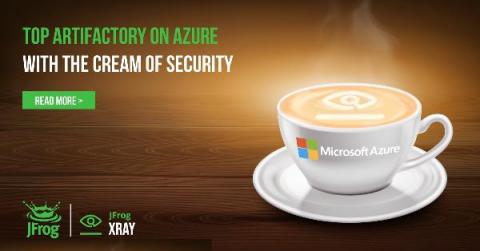
In a prior blog post, we explained how to install or update Artifactory through the Azure Marketplace in the amount of time it takes for your coffee order to arrive on the counter. Now you can add to your self-managed (BYOL) Artifactory deployment Xray, the cream of software component analysis (SCA) tools, through the Azure Marketplace as well.
Have you ever had to saw through a board by hand? I had to finish a partial cut by hand the other day while building a new mantle for my fireplace. It’s slow and difficult, and it often results in a lesser quality cut than one done with a power tool. It’s good exercise, though! We should all have to do it at least once so we appreciate our power tools more.
Many organizations don’t rely on outsourced security solutions such as MSSP. Rather, they prefer building their own SOC to combat nefarious cybersecurity threats and attacks. However, it is vital to know how an effective SOC is built and what should be its essential security ingredients.
With all the cyberthreats around today, security operations center (SOC) analysts need the right tools to identify, respond to, and stop those threats. Increasingly, threat intelligence sharing is one of the key tools for preventing threat actors from breaching organizations’ network, infrastructure, and operational environments, including the cloud.
Whether you are a CIO or chief executive of your company, the headlines of cybersecurity threats and attacks might be worrisome for you. There is always a question about how to ensure the cybersecurity of the organization to avoid financial, compliance and reputational risks. Today, to deal with ever-growing, fast, and sophisticated cybersecurity threats and attacks, enterprises either find the correct MSSP (Managed Security Service Provider) or build an efficient SOC (Security Operation Center).
Installation: At this stage, SOC analysts are advised to deploy a Security Information and Event Management (SIEM) and Host-Based Intrusion Detection System (HIDS) to detect attacks. To deny an attack, Cyber Kill Chain recommends using Two-Factor authentication, strong password, and privilege separation as well as disrupting attack using data execution prevention.
The world is being digitalized more and more. The technological advancements both in terms of hardware and software are grabbing the attention of cyber criminals towards enterprises of each size (e.g., small, medium, and large). The attackers use a complete chain or number of stages to launch a cyber-attack. A Cyber Kill Chain defines all these potential stages and the SOC team can use them to identify, detect, prevent, and contain attack before it causes real damage to the organization.