If you are responsible for cybersecurity or data protection in your organization, stop what you are doing and read this report. Actually, first, go patch your servers and applications and then read this report. Much like Verizon’s Data Breach Investigations Report (DBIR), the Payment Security Report (PSR) is a must-read for security professionals.
Payment services that operate electronically should adopt technologies that guarantees the safe authentication of the user and reduces, to the maximum extent possible, the risk of fraud. In order to achieve this, the European Union in 2007 passed the Payment Services Directive (PSD). The aim of this legislation is to regulate payment services and payment service providers throughout the European Union (EU) and European Economic Area (EEA).
PCI DSS, or the Payment Card Industry Data Security Standard, is the set of regulatory requirements all organizations who process card payments must adhere to. Sounds simple enough, right? But PCI compliance can pose a major challenge to organizations if they’re not equipped with the proper knowledge and tools.
The Payment Card Industry Data Security Standard (PCI DSS) program provides an information security compliance benchmark for companies that are handling, processing and storing cardholder data online. Software development and vulnerability management are covered in the PCI DSS compliance requirements as this concerns products and applications created to handle cardholder data.
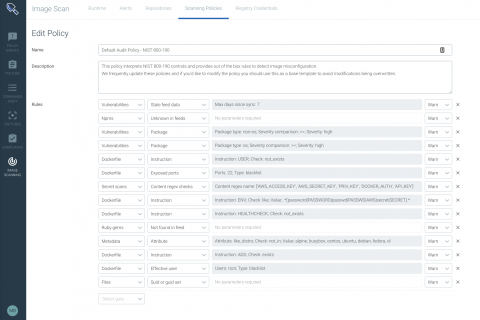
Today we are very excited to announce our latest release — Sysdig Secure 2.3! In this version of Sysdig Secure, we have invested heavily in hardening the compliance posture of Kubernetes, Docker configurations, and container images. We have released a set of features that provide compliance focused image scanning, guided remediation, compliance dashboards, and more.
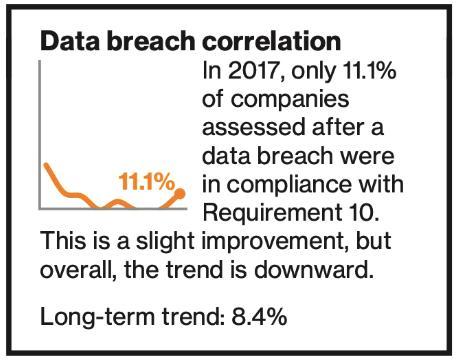
PCI DSS is an incredibly important compliance standard for those processing card payments. It stands for Payment Card Industry Data Security Standard. Whilst that doesn’t exactly roll off the tongue, it is a very resilient set of standard requirements that aims to make a business more secure. A 2018 payment security report revealed that no company affected by a data breach was completely compliant with PCI DSS.
Despite the fact that PCI DSS has been in effect for over a decade, and most merchants are achieving compliance, some of the world’s largest retailers have been hit by to data breaches. The sad truth is that achieving compliance doesn’t guarantee data protection, even for large organizations. For example, more than five million credit card numbers were stolen in 2018 hacks of two major retailers.