Security | Threat Detection | Cyberattacks | DevSecOps | Compliance

How to Reduce Your Attack Surface With PCI DSS Compliance

While PCI compliance sets an industry benchmark surrounding cybersecurity for the financial sector, organizations shouldn’t rely on it to protect themselves against data breaches. The harsh truth is that cybercriminals will exploit any weakness in an organization’s IT infrastructure to gain unauthorized access to sensitive data, not just those covered by PCI DSS compliance requirements.

A 5 Step Checklist for Complying with PCI DSS 4.0

In March 2022, the Payment Card Industry Data Security Standard (PCI DSS) was updated with a number of new and modified requirements. Since their last update in 2018, there has been a rapid increase in the use of cloud technologies, contactless payments have become the norm, and the COVID-19 pandemic spurred a massive growth in e-commerce and online payments.

How to Prepare for a PCI DSS Audit in 7 Steps

Organizations of all sizes that store, process, or transmit credit card data must comply with PCI DSS (Payment Card Industry Data Security Standards). The PCI standard’s 12 principal requirements can prove challenging for organizations to achieve and maintain, especially those in the highly-regulated financial industry. An upcoming PCI compliance audit may be cause for concern for many organizations, who are left scrambling to ensure their cybersecurity practices are up to scratch.

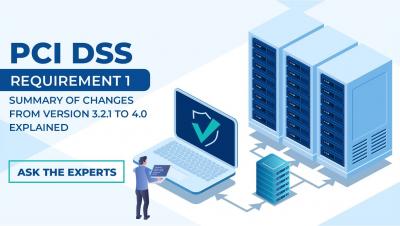
PCI DSS Requirement 1: Summary of Changes from Version 3.2.1 to 4.0 Explained

With the launch of the new PCI DSS 4.0 version, people are still trying to get a grip on the changes introduced and the requirements improvised in the latest version. So, explaining the changes in detail VISTA InfoSec is publishing a series of expert videos explaining each of the requirements of PCI DSS in detail. So, check out the first video that talks about Requirement 1 of the PCI DSS 4.0 version, explaining the updates in detail.#pcidss #pcidss4.0

PCI Sensitive Authentication Data Requirements - What you should know?

The PCI Council aims at minimizing the risk of cardholder data by securing sensitive cardholder data including Sensitive Authentication Data (SAD). For these reasons, PCI DSS Standards are strictly enforced in the payment card industry. According to the PCI DSS Security Standard Requirement, organizations dealing with sensitive card data are required to maintain maximum security and implement measures that ensure the confidentiality, privacy, and security of the cardholder data.

What you need to know about PCI 4.0: Requirements 10, 11 and 12

As we continue our review of the 12 Requirements of PCI DSS version 4.0, one has to stop and consider, is it possible to have a favorite section of a standard? After all, most guidance documents, as well as regulations are seen as tedious distractions from the importance of getting the job done. However, depending on a person’s position and function in an organization, it is possible to “geek out” on some of the information in these official papers.

Changes from PCI DSS Version 3.2.1 to 4.0

In March 2022, PCI DSS launched a 4.0 version, which sets the operational and security standards for users. This new version is the replacement for the 3.2.1 variant. The authorities have upgraded the version to enhance security measures and help individuals and businesses handle growing security threats seamlessly. Financial companies have been sending feedback for the inefficient payment systems, due to which the PCI DSS launched a new security version PCI-DSS v4.0.

What you need to know about PCI 4.0: Requirements 1, 2, 3 and 4.

The Payment Card Industry Security Standards Council has released its first update to their Data Security Standard (PCI DSS) since 2018. The new standard, version 4.0, is set to generally go into effect by 2024, but there are suggested updates that are not going to be required until a year after that. This, of course, creates a couple of problems for those who want to phase in the new standard.