Security | Threat Detection | Cyberattacks | DevSecOps | Compliance

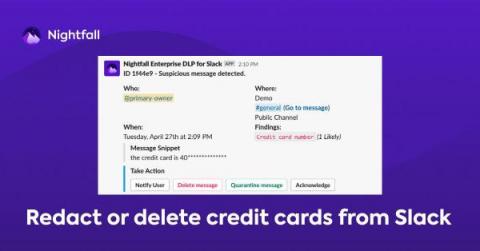
How to Prevent Credit Card Number Exposure in Slack for PCI Compliance

For many companies, a business credit card is part of the organization’s lifeblood. As such access to it must be vigilantly maintained. One potential area of risk is employees sharing credit card details in collaborative SaaS applications like Slack, where these details are at significant risk of being exposed to unauthorized parties.

Application Programming Interface (API) testing for PCI DSS compliance

This is the fourth blog in the series focused on PCI DSS, written by an AT&T Cybersecurity consultant. See the first blog relating to IAM and PCI DSS here. See the second blog on PCI DSS reporting details to ensure when contracting quarterly CDE tests here. The third blog on network and data flow diagrams for PCI DSS compliance is here.

Explaining the PCI DSS Evolution & Transition Phase

The boon of online business and credit card transactions in the early 90s and 2000s resulted in an increasing trend of online payment fraud. Since then, securing business and online card transactions has been a growing concern for all business and payment card companies. The increasing cases of high-profile data breaches and losses from online fraud emphasized the need for urgent measures and a standardized approach to address the issue.

Guidance on network and data flow diagrams for PCI DSS compliance

This is the third blog in the series focused on PCI DSS, written by an AT&T Cybersecurity consultant. See the first blog relating to IAM and PCI DSS here. See the second blog on PCI DSS reporting details to ensure when contracting quarterly CDE tests here. PCI DSS requires that an “entity” have up to date cardholder data (CHD) flow and networking diagrams to show the networks that CHD travels over.

PCI DSS reporting details to ensure when contracting quarterly CDE tests

This is the second blog in the series focused on PCI DSS, written by an AT&T Cybersecurity consultant. See the first blog relating to IAM and PCI DSS here. There are several issues implied in the PCI DSS Standard and its associated Report on Compliance which are rarely addressed in practice. This occurs frequently on penetration and vulnerability test reports that I’ve had to assess.

Identity and Access Management (IAM) in Payment Card Industry (PCI) Data Security Standard (DSS) environments.

Many organizations have multiple IAM schemes that they forget about when it comes to a robust compliance framework such as PCI DSS. There are, at minimum, two schemes that need to be reviewed, but consider if you have more from this potential, and probably incomplete, list: Bottom line, in whatever fashion someone or something validates their authorization to use the device, service, or application, that authorization must be mapped to the role and privileges afforded to that actor.

Risks of credit and debit card Fraud: Why PCI DSS is Essential?

The Advancement in technology and online payment transaction has offered an immense amount of convenience to both consumers and businesses. The ease and widespread acceptance of online payment including the credit/debit card transaction has streamlined business processes and payment transactions greatly.

Earning a 4.0: The Shift in PCI Compliance Requirements Is Underway

PCI 4.0 — the PCI Standards Security Council’s first update since 2018 to the PCI Data Security Standards (PCI DSS) — is a major iteration that shifts away from the traditional point-in-time assessment. Do you remember how an auditor would annually determine the PCI compliance status of a merchant’s or service provider’s system on a specific day in a specific month and assume — somehow — that the snapshot characterized their status all year?