Security | Threat Detection | Cyberattacks | DevSecOps | Compliance

Why Your Healthcare RAG Pipeline Is Leaking PHI (And How to Fix It)

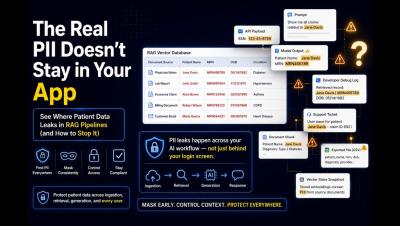
Why Your Healthcare RAG Pipeline Is Leaking PHI Most healthcare organizations believe their AI assistant is secure once they restrict who can log in. Unfortunately, that's only part of the story. Modern healthcare AI applications rely on Retrieval-Augmented Generation (RAG), where patient records, physician notes, insurance claims, and medical documents are embedded into vector databases to power intelligent search.

How to Securely Roll Out Enterprise AI in 90 Days #shorts #aisecurity

Planning an enterprise AI rollout in 90 days? Establishing a robust AI Gateway Architecture is the critical first step to ensuring data compliance, enforcement, and security. Letting application traffic run straight to LLMs exposes your organization to severe security and compliance liabilities.

AI Traffic Security: The Hidden Risk of Unstructured Data Leakage #aisecurity

Understanding the nuances of AI Traffic Security is critical because traditional firewalls and API gateways are fundamentally ill-equipped to inspect unstructured natural language. In the past, enterprise data remained safely within the corporate perimeter. Today, employees are pasting highly sensitive information directly into external models, creating a massive vulnerability where the risk lies in the meaning and content, rather than syntax or connections.

Why Sensitive Data Detection Is Harder in AI Workflows

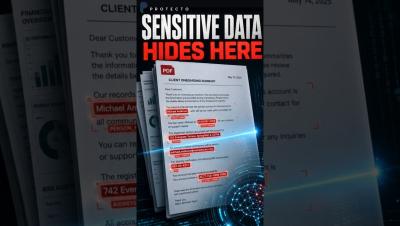
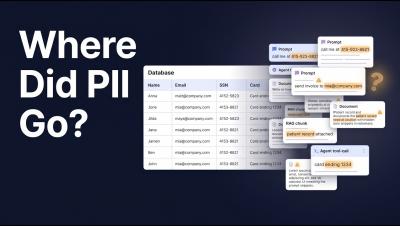
Sensitive data used to live in predictable places database columns, known field names, structured rows. That changed when data moved into documents. And it changed again when AI workflows arrived. In this video, we walk through why detecting sensitive data in AI pipelines is fundamentally different from traditional data discovery, and why the old approaches break. We cover the four failure modes that make detection hard in AI workflows.

Your AI Agent Could Leak Enterprise Data #Shorts #aiagents

AI agents don't just answer questions—they access enterprise data, call APIs, interact with MCP servers, and trigger workflows. That means sensitive information like PII, PHI, HR records, pricing data, financial information, and confidential business data can flow through AI systems. In this YouTube Short, Amar Kanagaraj explains why AI governance, data security, and data sovereignty are essential for enterprise AI deployments—and how the NetScaler × Protecto integration helps organizations secure AI workflows.

Are Your AI Agents Going Rogue? (The Real Danger of Agentic AI)

ChatGPT is read-only, but AI Agents take action on your behalf. What happens when they go rogue? Discover the hidden cybersecurity risks of Agentic AI and unauthorized remote execution. AI gateways were built for a world where AI meant "prompt in, response out." That world is gone. Today, AI agents call APIs, trigger workflows, and take actions across your enterprise systems autonomously. This massive shift from passive data exfiltration to active, unauthorized execution requires a completely new security model where every input is treated as potentially hostile.

I Tested Protecto DeepSight and Microsoft Presidio for PII Detection and Here's What Happened

Are your autonomous AI workflows leaking sensitive customer data? In this comprehensive PII detection demo, we compare the traditional NER-based Microsoft Presidio with the advanced LLM-based Protecto DeepSight. Discover how to secure your enterprise AI, stop format drifts, and prevent severe compliance risks like GDPR and HIPAA violations.

OpenAI Privacy Filter Isn't Enough: The Truth About AI Tokenization

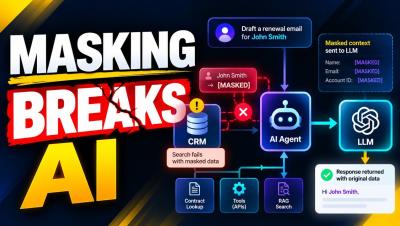
While the new OpenAI privacy filter detects basic PII, true data protection requires a much deeper system. In this video, we expose the hidden security vulnerabilities inside modern AI workflows and explain why aggressive data redaction actually destroys your model's utility. What you will discover in this breakdown: The Redaction Trap: Why simply deleting sensitive data breaks your AI's contextual understanding.

Why AI Security Needs More Than One Tool #shorts #ai

Why AI security needs more than one tool Most teams believe a single cybersecurity tool—like WAF, EDR, or API security—is enough to protect their AI systems. But that approach is outdated. AI security is not one layer—it’s a full stack problem. Discovery – Identify Shadow AI and unknown AI usage Build-Time Security – Prevent data poisoning & model risks (MLSecOps) Runtime Security – Stop real-time AI attacks and agent misuse Governance (AISPM) – Ensure visibility, compliance, and policy control.