Attack surfaces are a fundamental concept within information security. However, attack surfaces can be constituted of different things. For example, some formulations of an attack surface include not just software and hardware, but the people using them. In this post, we’re going to cover four common types of attack surface, discuss how you should think about the risks associated with each type, and best practices for addressing these risks.
Major companies have suffered serious data breaches this week, and even the city of Dallas, Texas, was hacked and damaged by data attacks that could expose a significant number of people, making it clear that everyone is at risk when it comes to identity theft and data attacks specifically. Huge mental health organizations like Brightline and Mcpherson Hospital exposed confidential patient data, and even the Metropolitan Opera House in New York City was the target of a breach attack this week.
Carvin Software is a massive company based in Gilbert, Arizona. The company creates specialized software solutions for business owners and individuals throughout the country. Carvin specializes in construction software but offers staffing solutions and other types of software services as well. A large variety of companies work with this organization, including Apple Staffing, Ace Personnel, Labor Force, and more.
On May 11th, the Cybersecurity and Infrastructure Security Agency (CISA) and the Federal Bureau of Investigation (FBI) released an advisory highlighting the active malicious exploitation of CVE-2023-27350 in PaperCut MF and PaperCut NG software by a threat actors including one known as the Bl00dy Ransomware Gang. The US-CERT Alert (AA23-131A) Malicious Actors Exploit CVE-2023-27350 in PaperCut MF and NG includes detailed information about this investigation (along with attacker TTPs and IOCs).
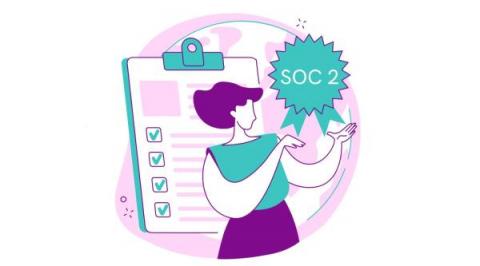
After tons of hard work, your company has successfully completed a SOC 2 audit and received a well-deserved SOC 2 report! Congratulations! Receiving your SOC 2 attestation is no easy feat, and it’s a significant milestone that demonstrates your company’s commitment to security and trust assurance. If you’re not sure what to do next, no worries – the hard part is done.
Open source code is everywhere, and it needs to be managed to mitigate security risks. Developers are tasked with creating engaging and reliable applications faster than ever. To achieve this, they rely heavily on open source code to quickly add functionality to their proprietary software. With open source code making up an estimated 60-80% of proprietary applications’ code bases, managing it has become critical to reducing an organization’s security risk.
Cybersecurity, privacy and data flows will be key topics at this year’s G7 in Japan. Against this backdrop, it has been a year since last year’s amendments to the Act on Protection of Personal Information (APPI) introduced revised data breach reporting and cross-border data flow rules. Meanwhile, developments in the Asia-Pacific (APAC) region have introduced data localization obligations in a variety of countries.
New data from the U.K.’s Office of National Statistics shows that this often overlooked scam has grown significantly in interest – likely because it pays off. If you’re not familiar with this kind of scam, it’s pretty simple: the scammer presents the victim with an opportunity for a grant, a prize – something of value – but requires a small payment up front (often called a processing fee, etc.).