Security | Threat Detection | Cyberattacks | DevSecOps | Compliance

SharePoint Security: 8 Most Common Vulnerabilities

Once written off as a failed CMS incapable of generating a significant user base, Microsoft’s SharePoint has continually defied expectations to become one of the most widely-used ECM and Collaboration products ever. It caters to over 200 million users and 250,000 organizations, including 85% of Fortune 500 companies. SharePoint is a user-friendly intranet portal and provides a consolidated center for document sharing, tracking, and overall project management.

Guidelines: How to reduce the noise of Falco rules in Sysdig Secure

Rule tuning is one of the most important steps during the definition of the security posture. With the detection rules, it’s impossible to use a “one fits all” approach: every customer has a unique environment, with its peculiarities and business needs. So, when a new rule is released it’s crucial to understand the security use case behind the detection and reduce the false positives (FP) as much as possible. The Threat Research Team constantly checks if noise occurs.

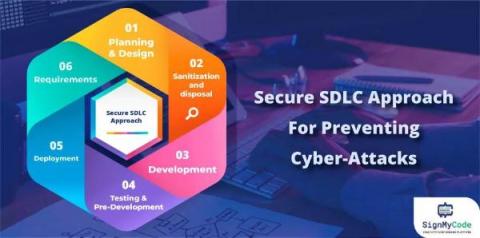
Secure SDLC Approach For Preventing Cyber-Attacks

According to CrowdStrike Report, a 50% increase has been analyzed in active intrusions and cyber-attacks in 2022. And the number may increase in 2023 too. With more and more applications becoming a target of hackers, it getting complex for developers to identify relevant security approaches. Development teams are somewhere unable to select the best mechanism, which would be compatible, high-performing, and strong enough to prevent attacks.

How the USPTO Uses Zero Trust to Protect the Nation's Most Valuable Data

The United States Patent and Trademark Office (USPTO) is the repository for a wealth of knowledge dating back to the nation's founding. The information behind many of the world's greatest inventions ranging from the light bulb, iPhone, Maglev trains to the zipper are housed and protected by the USPTO. A task that is now considerably more difficult as the primary storage medium moves from paper to on-premises and into the cloud.

CLM and Turkish KVKK Personal Data Protection Law

Data’s role in business processes continues to evolve. Today, organizations collect, store, process, and transmit more personal data than ever before, and legislative bodies respond by updating privacy laws. In 2016, Turkey passed the first iteration of its Personal Data Protection Law number 6698 (PDPL), which also established the Kişisel Verileri Koruma Kurumu (KVKK), the country’s data protection authority.

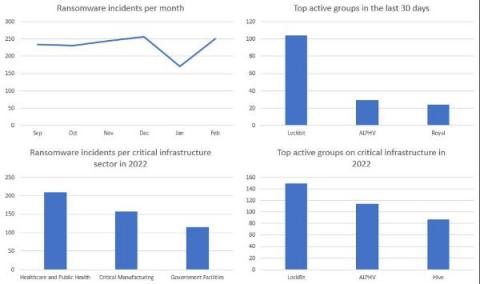
Detect the Most Common Ransomware TTPs to Prevent Attacks

In our new threat briefing, Forescout’s Vedere Labs details tactics, techniques and procedures (TTPs) commonly adopted by ransomware groups and provides specific mitigation recommendations. In addition to basic cyber hygiene practices, we recommend using Forescout XDR for extended detection and response. Its 1,500+ detection rules cover hundreds of the TTPs most commonly used by ransomware.

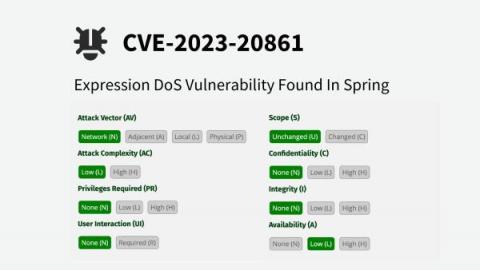
Expression DoS Vulnerability Found in Spring - CVE-2023-20861

As part of our efforts to improve the security of open-source software, we continuously test open-source projects with our JVM fuzzing engine Jazzer in Google’s OSS-Fuzz. One of our tests yielded a Denial of Service vulnerability in the Spring Framework (CVE-2023-20861). Spring is one of the most widely used frameworks for developing web applications in Java. As a result, vulnerabilities have an amplified impact on all applications that rely on the vulnerable version.

Emotet Comeback: New Campaign Using Binary Padding to Evade Detection

Emotet is undoubtedly a very resilient botnet. Even though its operation was disrupted by Europol in January 2021, Emotet came back a few months later and continues to spread. In May 2022, shortly after Microsoft released new controls related to malicious macros, Netskope Threat Labs analyzed an Emotet campaign where they were testing a new delivery method, by using LNK files.

What's Digital Rights Management (DRM)? Protecting Intellectual Property Today

Digital rights management (DRM) is a set of technologies, tools and techniques to protect your copyrighted digital content from unauthorized copying, sharing or usage. Content creators, organizations and distributors typically implement DRM to control access to their intellectual or sensitive property and ensure that it is only used by the terms and conditions they have established. It also helps companies secure their files and enables safe sharing, so they don’t land in the wrong hands.