Security | Threat Detection | Cyberattacks | DevSecOps | Compliance

Why is now the time to modernize first-party risk programs

In this article Senior leaders must remain vigilant in assessing both external and internal threats to their organizations. With emerging technologies, an ever-increasing interconnectedness, and the growing sophistication of cybercrime, risk management has become more complex and dynamic than ever before. As companies prepare for new challenges, 2025 is emerging as a critical year to modernize first-party risk programs.

The ultimate security questionnaire guide for vendors: Simplify compliance & build trust

In this article If you’re like 98% of organizations, you have at least one vendor that’s had a breach in the last two years. Although this doesn’t necessarily mean affiliated organizations were affected by the breaches, it does emphasize the extensive range and proximity of potential exposure to indirect risks. Vendors must develop a deep understanding of security questionnaires and implement best practices.

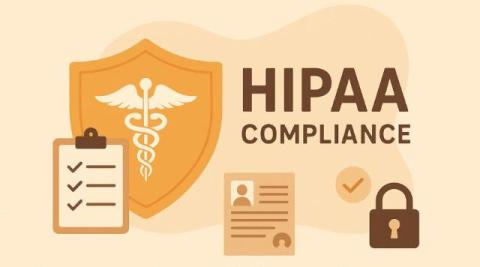
How have you seen successful organizations integrate HIPAA compliance into their everyday operations rather than treating it as just an annual audit requirement?

In this article Organizations that treat HIPAA compliance as a living, breathing part of their operations, not just an annual checkbox, are the ones best positioned to protect patient data, mitigate risk, and build enduring trust with patients and partners.

Unlock seamless HIPAA compliance in multi-cloud environments with TrustCloud

In this article Organizations that treat HIPAA compliance as a living, breathing part of their operations, not just an annual checkbox, are the ones best positioned to protect patient data, mitigate risk, and build enduring trust with patients and partners.

From NIST 800-53 to FedRAMP: What it really takes to bridge the gap

In this article If your cloud platform is already compliant with NIST SP 800-53, you’ve laid important groundwork for security and risk management. But when the goal shifts to serving U.S. federal agencies, the bar is raised significantly. That’s where FedRAMP enters the picture. While FedRAMP is built on NIST 800-53, the two are not interchangeable. FedRAMP adds a layer of rigor, documentation, and oversight specifically tailored to the requirements of the federal government.

How to translate CVSS scores into financial impact: A CISO's risk quantification guide

In this article Chief Information Security Officers (CISOs) face the daunting task of balancing technical cybersecurity risks with the financial realities of their organization. One critical component in this balancing act is the use of vulnerability scoring systems, in particular, the CVSS score. This article provides a detailed guide on how to translate CVSS scores into tangible financial impact estimates using proven methods of risk quantification.

Automating security questionnaires with open APIs: Trends in 2025

In this article Chief information security officers (CISOs) are continually tasked with understanding and deploying innovative solutions that reduce risk while increasing operational efficiency. As organizations expand their reliance on digital data and cloud-based infrastructures, the volume and complexity of security questionnaires have grown exponentially. In this environment, modernizing and streamlining these questionnaires is not simply about efficiency; it is a strategic imperative.

How to build a unified control framework for multi-standard compliance

In this article Businesses face an increasingly complex environment when it comes to compliance. With multiple standards emerging from different jurisdictions and regulatory bodies, achieving operational efficiency while ensuring regulatory adherence can be challenging. A Unified Control Framework (UCF) designed to handle multi-standard compliance is not just a technical solution; it is a leadership imperative that demands vision, collaboration, and robust strategies.

GDPR, CCPA, and ISO 27701: Harmonizing global data privacy compliance

In this article Data has become one of the most valuable assets for organizations. The increased flow of personal information across borders has compelled regulatory bodies and industry standards to introduce robust data privacy frameworks. Three prominent instruments that have emerged on the global stage are the European Union’s General Data Protection Regulation (GDPR), the California Consumer Privacy Act (CCPA), and the International Organization for Standardization’s ISO 27701 standard.

Third-party risk is everyone's problem: What CISOs need to know now

In this article The alarm wasn’t a breach. It was an invoice. A mid-sized enterprise onboarding a new analytics vendor found themselves tangled in a post-implementation scramble: customer data had been shared without encryption, the vendor’s security posture was based on trust alone, and legal had skipped the SLA review because “they’d worked with them before.” What followed wasn’t a data loss, but something quieter and more corrosive, an erosion of confidence.