Security | Threat Detection | Cyberattacks | DevSecOps | Compliance

Penetration testing: All you need to know

In this article At a breakneck pace, and with it, cyber threats are becoming more sophisticated and harder to detect. Organizations today face a heightened risk of data breaches, system compromises, and sophisticated cyberattacks. To counteract these risks, penetration testing has become a critical tool in the cybersecurity arsenal.

One unexpected challenge organizations face while implementing SOC 2

In this article SOC 2 compliance is often framed as a technical or operational milestone. But after guiding multiple organizations through the SOC 2 implementation process, I can confidently say that one of the most unexpected and arguably most complex challenges is cultural: shifting an entire organization’s mindset to embrace a “security-first” ethos.

Cross-border compliance: navigating complexities in a global economy

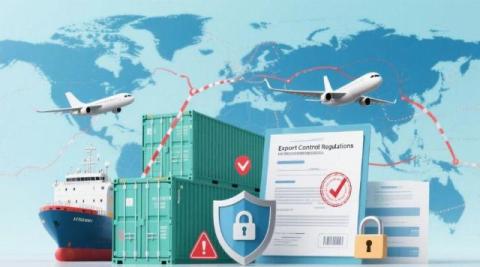
When business knows no borders, companies expanding globally face a hidden labyrinth: cross-border compliance. Every new country introduces a unique patchwork of regulations around data privacy, taxation, trade controls, labor laws, and industry-specific rules. What seems like a local detail in one jurisdiction may spiral into a costly mistake elsewhere. Yet the stakes are high; noncompliance can bring heavy fines, reputational damage, and operational disruption in markets you’re trying to serve.

Tackling cybersecurity today: Your top challenge and strategy

In this article Shadow IT used to be a fringe problem, a rogue Dropbox account here, a personal Gmail there. Now, it’s everywhere. One customer said it best: “We don’t have a Shadow IT problem. We are Shadow IT.” That stuck. It’s not malice. It’s urgency. People move fast. Procurement doesn’t. So teams swipe cards, spin up tools, and get on with it. The intentions are good. The risks are massive. We’ve seen it firsthand.

Taming shadow IT: How we're tackling one of cybersecurity's biggest hidden threats

In this article Shadow IT used to be a fringe problem, a rogue Dropbox account here, a personal Gmail there. Now, it’s everywhere. One customer said it best: “We don’t have a Shadow IT problem. We are Shadow IT.” That stuck. It’s not malice. It’s urgency. People move fast. Procurement doesn’t. So teams swipe cards, spin up tools, and get on with it. The intentions are good. The risks are massive. We’ve seen it firsthand.

Who is a Chief Compliance Officer?

In this article The role of a chief compliance officer (CCO) has become indispensable for organizations operating in diverse industries. The CCO is responsible for ensuring that the organization adheres to internal policies as well as external legal and regulatory requirements. This role not only protects the company from potential risks and liabilities but also reinforces the organization’s reputation, ethics, and overall corporate governance.

Comprehensive cybersecurity guide: Understanding 9+ cyberattack types

Every moment you browse, click, or connect, unseen adversaries are also probing. In today’s hyper-connected world, cyberattacks are no longer fringe threats; they’ve become relentless forces reshaping how we live, work, and protect our most prized digital assets. From stealthy phishing emails that mimic trusted colleagues to sophisticated ransomware schemes locking down entire networks, cyber risks now come in many guises.

Combining AI and APIs to close the risk visibility gap: A strategic framework

In this article API integrations have become the backbone of modern digital interactions, yet they also introduce vulnerabilities that can be exploited if left unchecked. The convergence of artificial intelligence (AI) and application programming interfaces (APIs) offers a promising solution to what many refer to as the “risk visibility gap.” This critical gap is defined as the difference between known API vulnerabilities and the unseen or unmonitored risks that arise from their use.

Critical emergency plan: Secure your organization before it's too late

In this article Emergencies don’t send invitations; they strike when least expected. Natural disasters, cyberattacks, supply chain failures, or even sudden regulatory pressures can all disrupt operations in a heartbeat. But organizations that treat emergency planning as a checkbox are exposed. A well-crafted emergency plan is more than a document; it’s your roadmap out of crisis, keeping people safe, operations steady, and reputation intact.

Fortify cyber resilience: Unstoppable defense strategies for 2025

In this article As we head into 2025, attackers are leveraging artificial intelligence, supply-chain vulnerabilities, and evolving regulatory pressures to breach defenses once considered solid. Cyber resilience is no longer a luxury; it’s a necessity. Organizations must build defense strategies that endure, adapt, and bounce back from incidents. It’s not just about preventing attacks; it’s about anticipating them, absorbing damage when they occur, and maintaining operations throughout.