Security | Threat Detection | Cyberattacks | DevSecOps | Compliance

Four common misconceptions about using AI in security operations

At this stage in AI's evolution, we’ve all heard the big promises - and overpromises - from vendors. But what about the people on the front lines of security operations? How are real practitioners feeling about using AI in their day-to-day work? In a recent webinar with guest speaker Allie Mellen, Principal Analyst at Forrester Research, we dug into how AI is actually being adopted in the SOC - what’s working, what’s not, and what's getting lost in the noise.
The top seven skills security analysts need to succeed, according to security leaders

According to the U.S. Bureau of Labor Statistics, demand for security analysts is expected to grow by more than 30% over the next decade, far outpacing the average for other roles. That’s good news for those entering or advancing in the field. But with heavy workloads and constant pressure to keep up with evolving threats, professional development can easily fall by the wayside. So how can security analysts stand out to hiring managers — and make sure their career path stays on track?

From backlog to breakthrough: enhancing IT service delivery and support with automation

Scaling IT operations was never going to be easy. By 2025, it was fair to expect that technology would ease classic challenges like high workloads, rising operational costs, and end-user friction. Yet IT leaders still face mounting pressure across identity and access management (IAM), endpoint management, request fulfillment, and incident response. Today’s end users are more demanding. IT operations are more complex. And time is in short supply.

What's new in Tines: April 2025 edition

Workbench offers many powerful capabilities, and with it, we believe you should be able to use any of your tools with their custom configurations. So, we decided private templates should be available for Workbench conversations. And the ability to take control of Tines AI features doesn’t stop there: Read more on private templates →

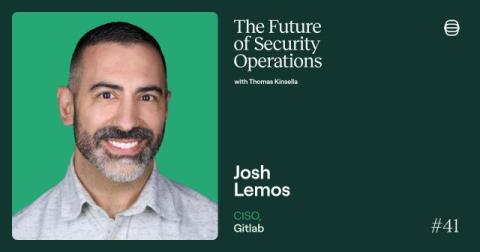
GitLab's CISO Josh Lemos on the pros and cons of making security practices public

In this week’s episode of The Future of Security Operations podcast, I'm joined by Josh Lemos, CISO at GitLab. Throughout his 15-year career in security, Josh has led teams at ServiceNow, Cylance, and Square. Known for his expertise in AI-driven security strategies, Josh is also a board member with HiddenLayer. He drives innovation at GitLab with a relentless focus on offensive security, identity management, and automation. Josh and I discuss.

The end of muckwork

Muckwork is the invisible drag on every company. It’s the repetitive, manual, low-leverage work we tolerate because we assume it’s necessary. Copying data between systems. Triaging alerts. Clicking through approvals. Tasks that keep things running but slow everything down. In 2006, Jeff Bezos called the backend plumbing of web apps “muck.” AWS was created to eliminate it. Today, the same kind of work is everywhere in the enterprise. We call it muckwork.

Brex's CISO Mark Hillick on avoiding tool bloat and learning from high-severity incidents

In this week’s episode of The Future of Security Operations podcast, I'm joined by Mark Hillick, CISO at Brex. Mark’s experience in the security industry spans more than two decades. He started out as a security engineer at Allied Irish Banks before advancing through companies like MongoDB to become Director and Head of Security at Riot Games. His book, The Security Path, features over 70 interviews with security professionals on their career journeys. Mark and I discuss.

Building better workflows with multiple drafts

In today's security and IT landscape, the workflows that power your operations are not merely convenient tools—they're essential infrastructure. When a phishing detection workflow fails or an access control process malfunctions, the consequences can be severe: security incidents remain undetected, response times suffer, and organizational risk escalates significantly. This reality creates a paradox for teams.

Automating your risk register using Tines Records

A risk register is a GRC tool used by teams to identify, assess, and manage various risks within an organization. It acts as a centralized repository and looks at the impact and probability of a risk to prioritize its management. In cyber security, a risk register helps maintain compliance with various standards like the ISO 27001 Information Security Management System (ISMS), NIST SP800-30 Guide for Conducting Risk Assessments, or the new European NIS 2 directive.

The Trade Desk's Joe McCallister on salary negotiation and leading without micromanaging

In this week’s episode of The Future of Security Operations podcast, I'm joined by Joe McCallister. Joe’s journey in security is truly unique - in less than a decade, he pivoted from selling BMWs to his current role as Senior Manager of Cybersecurity Operations at The Trade Desk. He’s also led impactful initiatives in risk management, threat hunting, and incident response at Synoptek.