Security | Threat Detection | Cyberattacks | DevSecOps | Compliance

Detecting CVE-2022-30216: Windows Server Service Tampering

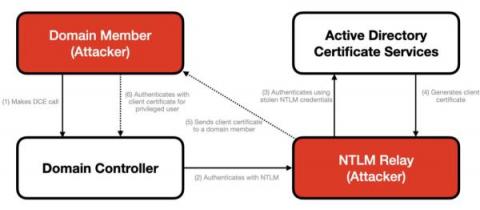
In July 2022, Microsoft disclosed a vulnerability in the Windows Server Service that allows an authenticated user to remotely access a local API call on a domain controller, which triggers an NTLM request. This results in a leak of credentials that allows an attacker to authenticate to Active Directory Certification Services (ADCS) and to generate a client certificate that enables remote code execution on a domain controller.

The best cybersecurity defense is great evidence

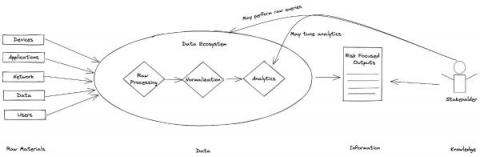
The saying “data is king” has been around for quite a while and we all know that the world operates and makes decisions on digital data 24x7x365. But, is data king in the field of cybersecurity? I believe that evidence - not data - is what is needed to speed defenders’ knowledge and response capabilities, so let's talk about both.

The evidence bank: leveraging security's most valuable asset

Evidence is the currency cyber defenders use to pay down security debt, balancing the value equation between adversaries and the enterprise. Defenders can use evidence proactively, identifying and protecting structural risks within our zone of control. Evidence can also be used reactively by supporting detection (re)engineering, response, and recovery activities, guiding us back to identifying and protecting structural risks.

Enriching NDR logs with context

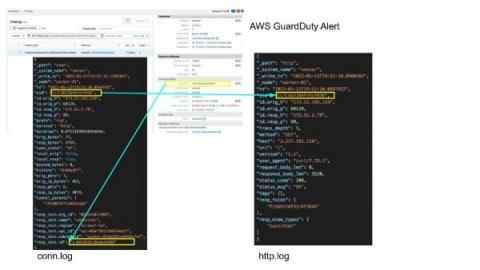
In this post, we show how enriching Zeek® logs with cloud and container context makes it much faster to tie interesting activity to the container or cloud asset involved.In cloud or container environments, layer 3 networking is abstracted away from the higher-level tasks of running workloads or presenting data. Because of this abstraction, when Zeek logs are collected for cloud or container network environments, the attribution of a network flow to actual workload or application is difficult.

Detecting CVE-2022-26937 with Zeek

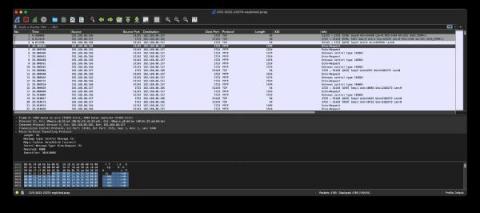
This month, Microsoft announced a vulnerability in NFS. The exploit lies in how an attacker can force a victim NFS server to request an address from the attacker’s fake NFS server. The address returned will overflow memory on the victim NFS server and cause a crash. Through Microsoft’s MAPP program, Corelight Labs reviewed a proof-of-concept exploit for this vulnerability and wrote a Zeek®-based detection for it. You can find a PCAP of this exploit in our GitHub repository.

Detecting CVE-2022-23270 in PPTP

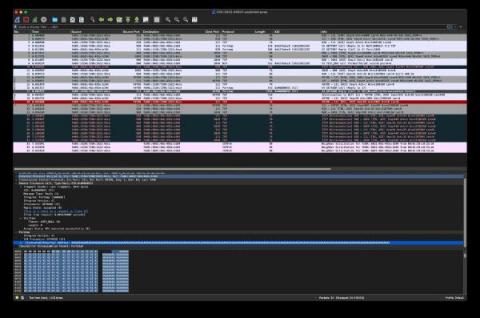
This month, Microsoft announced a vulnerability in PPTP, a part of the VPN remote access services on Windows systems that runs on port 1723/tcp. Through Microsoft’s MAPP program, Corelight Labs reviewed a proof of concept exploit for this vulnerability and wrote a Zeek®-based detection for it.

Corelight Investigator accelerates threat hunting

This morning we announced Corelight Investigator, an open NDR platform that enables security teams with the next-level evidence they need to disrupt attacks and accelerate threat hunting through an easy-to-use, quick-to-deploy SaaS solution. How does it work? Investigator combines battle-tested network evidence with intelligent alert scoring to deliver prioritized alerts tied to correlated evidence, enabling analysts to cut through the queue and accelerate incident response.

Finding CVE-2022-22954 with Zeek

CISA released a warning to federal agencies on May 18 that APT actors are actively exploiting recent vulnerabilities found in VMware, including CVE-2022-22954. Your first thought may have been to want new signatures, indicators, and/or behavioral techniques to detect attempted and successful exploits. If you’re a Zeek user or Corelight customer, you’ll find that sometimes you’re already getting what you need.

What makes evidence uniquely valuable?

American novelist F. Scott Fitzgerald famously wrote that “the test of a first-rate intelligence is the ability to hold two opposing ideas in mind at the same time, and still retain the ability to function.” All experienced security practitioners learn to master this mental trick. On the one hand, they believe efforts to prevent and detect breaches will be effective. On the other hand, they diligently prepare for the day when their efforts will fail.

Another day, another DCE/RPC RCE

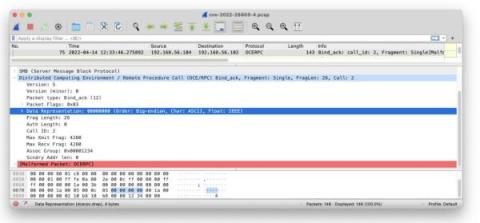
CVE-2022-26809 was patched in Microsoft’s previous Patch Tuesday (April 12) and it’s a doozy: remote code execution on affected versions of DCE/RPC hosts. The vulnerability attracted a lot of attention in the security community, both because of its severity but also because it appears to be really hard to trigger.