What's New in Teleport 11
It’s the news everyone’s been waiting for: Teleport’s version 11 release! This release is packed with features from SFTP support all the way to GitHub Actions Machine ID compatibility. Let’s dive in!


It’s the news everyone’s been waiting for: Teleport’s version 11 release! This release is packed with features from SFTP support all the way to GitHub Actions Machine ID compatibility. Let’s dive in!
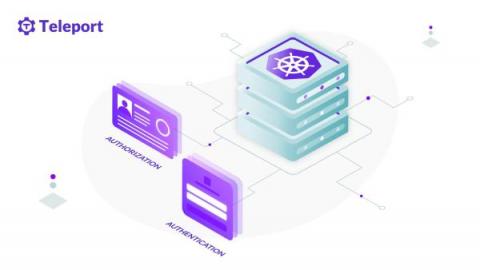
Kubernetes is a very complex product where creating and managing clusters requires a great deal of knowledge on a wide range of topics. The introduction of managed clusters brought simplicity to the process allowing users to focus on extracting the most out of the system. One of the areas of most interest and different configurations is authentication and authorization. In authentication, the main objective, and most critical of all, is to ensure the identity and validity of users and machines.
As companies increasingly move to remote workforces, the need for secure and rapid offboarding has never been greater. Flywheel, a digital agency that specializes in healthcare and life sciences, has found great success using Teleport to streamline its offboarding process. Flywheel had been using a traditional VPN solution to grant access to customer environments, but found the process to be slow and cumbersome.
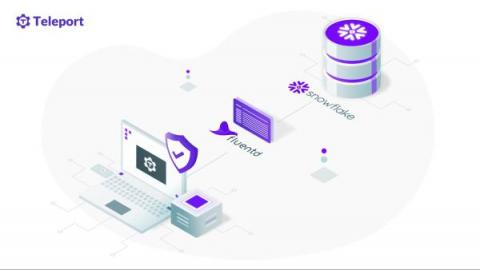
One of the most important features Teleport has to offer is that it centralizes all of your infrastructure’s audit logging into one central place, mapping every query, every command and every session to an individual user's identity. As you hire more engineers and resources scale, it can become increasingly difficult to manage all of this log data. Luckily Teleport’s extensibility makes this log data extremely easy to format, export and monitor all in a secure, event-driven way.
Security Assertion Markup Language 2.0, or more commonly known as SAML in the industry, is one of the most used protocols for single-sign-on on the modern web. It allows an application like Teleport to communicate with an upstream identity provider like Okta or Google Workspace to securely get trusted information about users when they log in, removing the need for sign-ups, log-ins and tying identities to people inside the application.
With Teleport, Gluu can provide its clients with near-instantaneous access to its open-source software, allowing them to get up and running in minutes. This is a huge benefit for organizations who need to quickly provision their tools in order to start using them. In the past, Gluu has documented many ways that it uses Teleport to provide Gluu clients a gateway for their tools.
Teleport 10.3 was released on September 30, 2022 along with a lot of new features, bug fixes and improvements. This blog post will focus on one new feature that deserves a deeper dive.
JSON web tokens (JWTs) are an open standard for securely transmitting data as a JSON object between parties in a compact and self-contained format. Knowledge of JWTs is important because most modern systems and tools use them for secure, efficient and scalable authorization. Knowing about JWTs will also help you understand how third-party integrations with other software work.
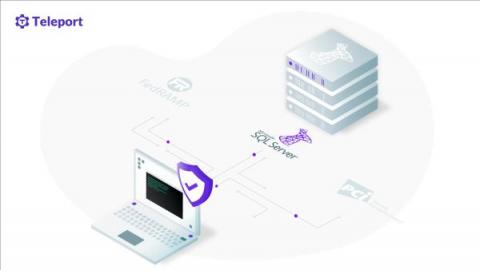
Support for Microsoft SQL Server was added in our Teleport 9 release, along with support for Redis and MariaDB. In this post, we'll specifically be looking at Microsoft SQL Server and will cover how to connect to it remotely using Teleport. Before we get into the steps of accessing SQL Server with Teleport, let's briefly go over a few recommended security postures with SQL Server and how Teleport actually helps to implement them.
Remote Desktop Protocol (RDP) is a protocol developed by Microsoft which at its core is designed to give users a graphical interface to a remote Windows computer over a network connection. The remote Windows machine runs an RDP server, while the local computer accessing it runs an RDP client. Windows comes bundled with Microsoft's Remote Desktop Connection to easily access Windows hosts over RDP.