Security | Threat Detection | Cyberattacks | DevSecOps | Compliance

Guide: DORA Compliance Evidence for Agentic AI

→ What DORA assessors actually evaluate → How DORA controls map to specific evidence requirements → Common evidence gaps that can interfere with audits → The evidence challenges of agentic AI → The full blueprint for DORA compliance now and in the future The Digital Operational Resilience Act (DORA), otherwise known as Regulation (EU) 2022/2554, represents a fundamental shift in how financial institutions must show their compliance.

How Claude Helped Build a Proxmox Environment (and What I Learned Along the Way)

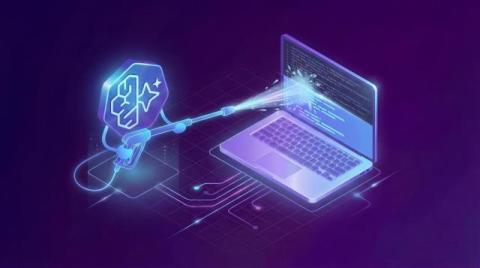
As a solutions architect, building out customer demo environments is part of the job. I regularly spin up lab scenarios to support evaluations and proof-of-concept work — and if you've done this before, you know it can eat up days of your life. So when I recently decided to refresh my homelab and migrate to Proxmox, I saw it as the perfect opportunity to put AI-assisted infrastructure automation to the test. The goal?

Reverse Proxy: How It Works & Example Architecture

Accessing modern infrastructure requires more than a network-level foothold. As services spread across clouds, clusters, and regions, the question of who can reach what stops being a network question and becomes an identity question. Reverse proxies are the component that answers it. A reverse proxy sits between clients and backend services, validating identity and enforcing authorization on every inbound request before any application is touched.

NIST CSF 2.0 and Agentic AI: Building Profiles for Autonomous Systems

AI agents are likely already running inside your infrastructure. They triage alerts, remediate incidents, provision resources, and make decisions without waiting for a human to approve each step. For teams aligned to NIST’s Cybersecurity Framework (CSF) 2.0, this creates a problem: the framework assumes human actors, human-speed decisions, and human-readable audit trails. Autonomous systems break all three assumptions. The good news is that CSF 2.0 was designed to be adapted.

EU AI Act Compliance: Requirements, Risks, and What to Document

→ Audit your AI systems against EU AI Act requirements now — validate Annex IV technical documentation, logging, and data governance. The initial August 2025 compliance date has passed, and full penalties begin in August 2026. → Build a continuous compliance evidence chain — document risk management across the full lifecycle (design, development, deployment, and post-market monitoring).

From Plaintext, to BLESS, to Identity: The Evolution of Secure Remote Access

My first introduction to UNIX remote access was via telnet and rsh protocols in college, which was the standard method at the time. But I soon started reading articles about how easy it was for someone to sniff the network and capture passwords since they were being transmitted in plaintext. On the shared network segments common to university campuses and early enterprise environments, the tools to intercept traffic were freely available, well-documented, and required very little skill to use.

NIST 800-171 and Agentic AI: What Autonomous Systems Mean for CUI Protection

NIST Special Publication 800-171 defines a precise set of security requirements for organizations that handle Controlled Unclassified Information (CUI) outside of federal systems. For defense contractors, subcontractors, and their engineering teams, these controls are non-negotiable with the advent of the Cybersecurity Maturity Model Certification (CMMC) program, which dictates how CUI must be accessed, logged, transmitted, and protected across every system in scope. That scope is shifting.

CMMC Requirements for AI Systems: What Assessors Actually Look For

Josh Rector is the Compliance Director, Public Sector at Ace of Cloud, a security and compliance consulting firm, certified CMMC Third-Party Assessor Organization (C3PAO), and Registered Provider Organization (RPO). With more than a decade of experience in cybersecurity compliance, he has worked both sides of the assessment table, leading internal and external assessments, serving as ISSO for systems at federal agencies, and guiding cloud service providers through the FedRAMP authorization process.

Kubernetes for Agentic AI: Best Practices for Security and Observability

Agentic AI workloads are shipping to production on Kubernetes faster than the standards to secure them. Many teams deploying autonomous, tool-calling agents as containerized microservices do so without a shared baseline for securing or monitoring those containers. The CNCF AI Technical Community Group recently published a comprehensive article on cloud-native agentic standards, marking the first attempt to define best practices for such deployments.