Learn how GitGuardian supports expanding privileged access management to include non-human identities and improve secrets management across your infrastructure and vaults.
Credential abuse occurs when cybercriminals use stolen or leaked credentials to gain unauthorized access to online accounts and critical systems. As part of broader cyber attacks, credential abuse is a highly effective attack vector, especially when many people reuse the same password across multiple accounts. Credential abuse can lead to data breaches, identity theft, financial loss and lasting reputational damage for both individuals and organizations.
The European Union (EU) is redefining its digital landscape with sovereignty, security and trust at the core. In the 2025 EU State of the Union, Commission President Ursula von der Leyen outlined a bold vision: sovereignty, resilience, data protection and digital identity. These priorities reflect a reality where security, privacy and accountability are not only regulatory demands but also competitive advantages.
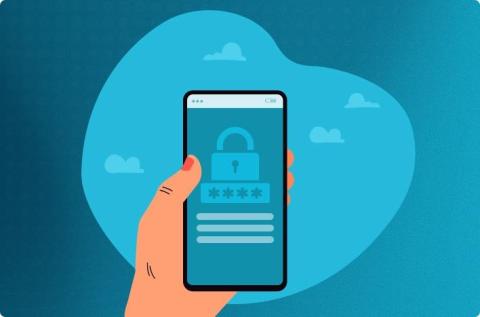
Organizations are moving from traditional workstations to advanced, mobile-based solutions. Hybrid working mode is on the rise, and with that, the role of phones and tablets becomes more important. Individuals now work from any location on their mobile devices. But the convenience of working on phones and tablets can turn into a serious security risk if there is no mechanism in place for securing data. This is where tools like MCM clients fill the gap.
Recharging the battery of phones, tablets, or laptops in public places such as airports, stations, hotels, or cafés is quite normal and convenient. Everybody does it while traveling or working on the go. Most of these charging points rely on USB ports, which not only deliver power but also support data transfer. In recent years, cybersecurity authorities such as the FBI and the Federal Communications Commission (FCC) have warned users about a rising cyber threat known as juice jacking.
One of the biggest reasons why cybercrime is so bad — and is increasing each year —is that so much of it is committed by foreign nationals who are not physically located in the country they are attacking. This makes it far harder for law enforcement to identify, stop and arrest cybercriminals, as often the victim country’s legal jurisdictions, warrants and courts do not apply in the criminal’s country.
AI agents are moving into the enterprise at full speed. They’re writing code, running analyses, managing workflows, and increasingly shouldering responsibilities once trusted to humans. The opportunity is enormous, but so is the risk. Over-reliance, over-trust, and a lack of guardrails create dangerous fragility. When things go wrong—and they will—enterprises can face three inevitable “panic” moments: unmistakable signs of AI agent failures.
Organizations running containerized environments face complex security challenges as they scale Kubernetes and adopt dynamic, ephemeral infrastructure. Traditional security tools often miss activity inside containers, making it difficult to detect policy violations or threats at runtime. Falco is a runtime security monitoring tool for containerized infrastructure.
The rapid scale of AI development and deployment has introduced a number of unprecedented privacy and compliance challenges for enterprises. IT and compliance teams are looking for solutions that address these concerns without affecting AI adoption. Tokenization has for long been the solution for protecting sensitive data. However, to implement it correctly, it is critical to understand which type fits best – both protect PII but differently.
We’re excited to share new updates and enhancements for October, including: For more information on these updates and others, please read the complete list below and follow the links for more detailed articles.