Security | Threat Detection | Cyberattacks | DevSecOps | Compliance

Tackling NCSC Guidance - Part 1 (Data Protection)

Launched in 2016, the National Cyber Security Centre (NCSC) provides advice and support to the public and private sectors on how to address cybersecurity threats. At the moment, NCSC provides information and practical guidance in various articles on its website rather than formal requirements or regulations. That said, NCSC security audits are currently underway, to assess existing solutions and their level of alignment with NCSC guidelines.


Linux Persistence and Privilege Escalation: Threat Research January 2022 Release

In this January 2022 release, The Splunk Threat Research (STRT) team focused on the recently released Sysmon for Linux technology addition to Splunk. This new add-on opens the door for new ways of monitoring, creating detections, and defending against Linux systems threats. Linux is the most commonly used operating system across the world with approximately 67% of the internet.

Customizing the JFrog Xray Horizontal Pod Autoscaler

In cloud native computing (Kubernetes in our case), there is a requirement to automatically scale the compute resources used for performing a task. The autoscaling cloud computer strategy allows to dynamically adjust the active number of application servers and allocated resources instead of responding manually in real-time to traffic surges that necessitate more resources and instances.

Access Brokers: Who Are the Targets, and What Are They Worth?

Access brokers have become a key component of the eCrime threat landscape, selling access to threat actors and facilitating myriad criminal activities. Many have established relationships with big game hunting (BGH) ransomware operators and affiliates of prolific ransomware-as-a-Service (RaaS) programs.

CrowdStrike Automates Vulnerability Remediation Processes While Enhancing SecOps Visibility

Adversaries are becoming more adept and sophisticated in their attacks. Taking advantage of vulnerabilities present in major software is often an attractive entry point for establishing a campaign within an enterprise environment. The CrowdStrike 2022 Global Threat Report highlights how adversaries continue to shift tradecraft and weaponize vulnerabilities to evade detection and gain access to critical applications and infrastructure.

Even non-developers can fix security vulnerabilities in code at The Big Fix

Here’s the story of how a regular project management task resulted in me opening a pull request to an open source repository on GitHub. As a new member of Snyk’s Marketing team, I was recently involved in the preparation for The Big Fix, an event that brings together developers, DevOps, and security practitioners of all skill levels to help make the internet more secure by fixing vulnerabilities while having fun and being rewarded with swag.

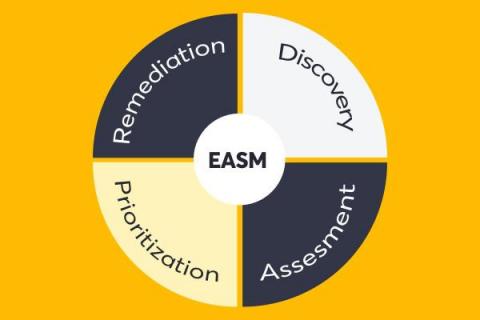
Why is securing the external attack surface a hot topic for security experts right now?

Gone are the days when gate-based security processes were the most effective way to ensure security of an organization’s external attack surface. Getting the security team to sign off on every new application or asset before they go live simply is not scalable.

Will the Cloud Kill Security Agents?

The “agents or no agents” debate is ancient and eternal. Every decade or so, we go through another round of “agents are terrible, let’s end them” and “we need more visibility and control to secure the system, maybe we’ll call it a ‘sensor’ this time.” We ultimately always land on the same conclusion. There are no silver bullets. Today, the debate is alive and well because cloud is the new frontier, so surely agents are dead this time?