Weekly Cyber Security News 14/09/2023
A selection of this week’s more interesting vulnerability disclosures and cyber security news. Here we are again with another zero day affecting iMessage…


A selection of this week’s more interesting vulnerability disclosures and cyber security news. Here we are again with another zero day affecting iMessage…
A new comprehensive study by researchers at RWTH Aachen University in Germany did a study on over 300,000 docker images finding that 8.5% contained API keys and private keys that malicious actors could exploit in the wild.
Numerous U.S.-based companies that operate online have customers from the European Union (EU) or other parts of the European Economic Area (EEA). If your business engages with these customers, it is subject to the EU’s General Data Protection Regulation (GDPR). This extensive data privacy regulation has an impact on many U.S. entities due to its extraterritorial reach.
Under Data Encryption, the CISA Zero Trust Maturity Model v2.0 cites the criticality of “cryptographic agility” on the third (out of four) level of maturity. Cryptographic agility is the ability to change the underlying cryptographic algorithms in applications and communications channels. I believe this highlights the importance for organizations to be able to pivot their encryption algorithms to a post-quantum cryptographic world.
Cybercriminals can't ascertain your phone password just from a Wi-Fi signal, but they can come close according to a method described in a recent research paper. Researchers have demonstrated a method that uses Wi-Fi signals to infer numerical passwords, and the mechanics behind it are nothing short of intriguing. Side-channel attacks often remind me of James Bond-like espionage. So does a research paper that is to appear at ACM CCS later this year.
As the aftermath unfolds, the details around the recent attack on MGM Resorts, providing crucial insight into the attacks impact, who’s responsible, and how it started. On September 11, Las Vegas-based MGM Resorts International reported a cybersecurity “issue” affecting many of the company’s systems.
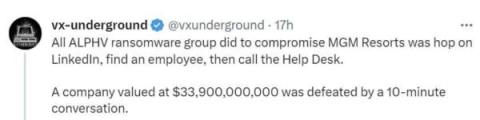
Four days later, $52 million in lost revenues and counting, a cyber attack on MGM Resorts International, a $14 billion Las Vegas gaming empire with Hollywood-famous hotel spreads like the Bellagio, Cosmopolitan, Excalibur, Luxor, and the MGM Grand itself, had the house brought down by a perfect example of vishing…a 10-minute phone call. Gamblers could not gamble. Guests could not access rooms. Lights went out. Panic set in.
We’ve made several exciting enhancements to the Nightfall platform this month, including multiple new features as well as a more streamlined user experience. Read on to learn more about what our team has been up to.
Welcome to the fourth and final part in our series on credit card fraud originating in Russia. After covering the basics of what carding is, why so much of it is perpetrated by Russian speakers, then digging deeper into how carders operate, in this part we’ll explore ways to protect yourself and your business from this pervasive financial threat. Click here to download the full report: "Inside Russian Carding" (PDF)
The Digital Operational Resilience Act (DORA) is a piece of legislation in the EU (Regulation (EU) 2022/2554) that aims to enhance the operational resilience of the financial sector.