Security | Threat Detection | Cyberattacks | DevSecOps | Compliance

How to Become a Certified Kubernetes Administrator?

Without a doubt, Kubernetes is the most prominent container orchestration tool. And you’ve probably noticed that many positions available to IT professionals require Kubernetes experience. One way to gain or prove your Kubernetes knowledge is by becoming a Certified Kubernetes Administrator (CKA). This certification is issued by the Cloud Native Computing Foundation (CNCF) in collaboration with the Linux Foundation. They offer three Kubernetes related certifications.

Six of My Favorite Styra Declarative Authorization Service Features

Open Policy Agent (OPA) allows developers to accelerate time to market and focus on their differentiated work, instead of spending their time figuring out how they are going to write bespoke authorization policies. With OPA handling authorization decisions across the stack, each service, app or platform API just has to handle enforcement of OPA decisions.

What has the Log4shell vulnerability taught us about application security?

A week ago, we had no idea what Log4shell was. Today, we have the global developer community coming together to keep itself safe from a vulnerability that ranks the highest in terms of risk. We need technical solutions, but what does it mean for the landscape of application security, and what have we learned from this situation?

Security in context: When is a CVE not a CVE?

At Snyk we have some general points of principle that we use to help guide our security thinking and decision making. Firstly, it is always important to understand from whom we are protecting, as it has implications for how we need to act. As an example of this, if our artefact is a web server, then we need to protect it against untrusted users. Whilst if our artefact is encryption software, then we clearly need to protect it even from users with physical access to the system.

2022 Cloud-native Trends: Need for AuthZ and OPA Will Grow

It’s that time of year again — full of ugly sweaters, holiday cookies and technology predictions (cloud-native style)! Last year, we predicted that we’d see continued Kubernetes adoption, focus on DevSecOps in organizations and open source dominance. This year, we sat down with our co-founder and CTO, Tim Hinrichs and our CEO Bill Mann to hear a few of their predictions for the open source and cloud-native authorization market.

Fireside Chat: Log4j and Injection Flaws

Join us for a fireside chat with Micah Silverman, Snyk's Director of DevSecOps Acceleration, and Vandana Verma, Security Relations Leader at Snyk, as we answer your #Log4Shell questions: What is it and how does it affect us? How do I find and fix the #Log4J vulnerability? What can other language ecosystems learn from this? We'll also talk about the OWASP Top 10 and injection flaws.

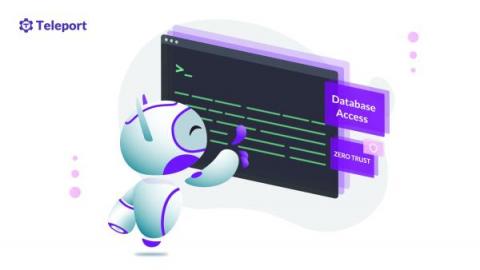
Introducing Teleport Access Plane for Linux and Windows Hosts

We are excited to welcome Windows hosts to the Teleport Access Plane. For the past 5 years we’ve helped refine our Access Plane for Linux hosts, providing short-lived certificate-based access, RBAC and developer-friendly access to resources. As we’ve rolled Teleport to larger organizations, we found that people wanted the same convenience and security of Teleport but for Windows hosts.

Log4j Log4Shell Vulnerability: All You Need To Know

On December 9, 2021, a researcher from the Alibaba Cloud Security Team dropped a zero-day remote code execution exploit on Twitter, targeting the extremely popular log4j logging framework for Java. Since then, the trivially exploitable (weaponized PoCs are available publicly) and extremely popular library has reportedly been massively exploited and has gotten wide coverage on media and social networks.