The latest News and Information on Data Security including privacy, protection, and encryption.
Data bias: the insidious threat lurking in your data unless you’ve taken active steps to mitigate it. It causes the potential to harm, skew or invalidate your data completely – or sometimes all three at once.
HIPAA requires covered entities and business associates to secure protected health information (PHI). Failing to do so can result in steep fines and penalties. Some PHI breaches, however, are out of the organization’s control. Determined hackers can expose PHI, and employees can make mistakes — they’re only human, Despite training, rigorous security protocols, and constant monitoring, data breaches can happen.
Considering the forensic-level attention to data residency that was paid in the early days of cloud, it’s interesting how little regard is now given to the matter. Explaining the many pitfalls of certain data residency challenges to fellow CISOs (and key stakeholders) and why real-time visualisations of data flow matter, is often an interesting exercise.
Microsoft 365 provides a powerful document management and collaboration platform. However, with so many applications available in the platform to store and share information internally and with external parties, such as partners, contractors and vendors, ensuring proper access and data security can be a challenge. In this blog we examine how to ensure secure file sharing in Microsoft 365 and Teams.
In part one of this two-part blog series, we analyzed the UK National Cyber Security Centre’s (NCSC) guidance relating to backups and data protection. Now in this post, we will examine NCSC’s guidance around mitigating malware and ransomware attacks. Recall that NCSC, at present, provides information and practical guidance in various articles on its website rather than formal requirements or regulations.
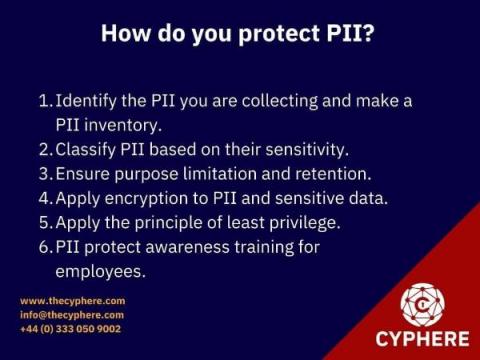
Over the last few years, the rise in data breaches involving personally identifiable information (PII) has resulted in the loss of millions of records.
HIPAA compliance requires covered entities and business associates to secure protected health information. Social Security numbers, medical record numbers, health plan beneficiary numbers, account numbers, and names of patients, relatives, or employers all must be secured from unauthorized access. The penalties and fines for HIPAA violations can be steep — in some instances reaching millions of dollars. And, HIPAA isn’t prescriptive about what it takes to be in compliance.
Those who work in the healthcare industry know: HIPAA compliance is often fiercely enforced by the Department of Health and Human Services, and penalties can be steep. “Each covered entity is required to implement safeguards to prevent the unauthorized disclosure of PHI. These safeguards will vary depending on the size of the covered entity and the nature of healthcare it provides, but the penalties for failing to safeguard the integrity of PHI can be extremely high.