Security | Threat Detection | Cyberattacks | DevSecOps | Compliance

Complete Guide on Man in the Middle Attack ( MITM ) For Mobile Applications

Businesses have known for a long time that there always are weak links in security, especially mobile security. The worse part is not that businesses get affected by these security issues, but the fact that public awareness is terribly low on how vulnerable this can be. The man in the middle attack has been one of the most exploited ways hackers have tried and managed to steal information and money.
CSRF Attack Examples and Mitigations

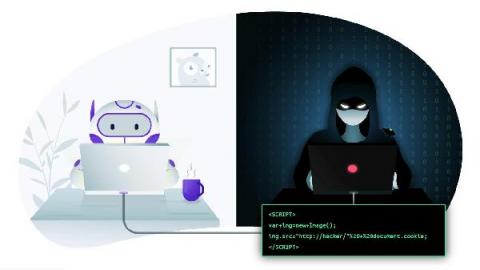
Cross-Site Request Forgery (CSRF) attacks allow an attacker to forge and submit requests as a logged-in user to a web application. CSRF exploits the fact that HTML elements send ambient credentials (like cookies) with requests, even cross-origin. Like XSS, to launch a CSRF attack the attacker has to convince the victim to either click on or navigate to a link.

Splunk for OT Security V2: SOAR and More

In the last 90 days, the news of cyberattacks on critical infrastructure has been stunning. From the unprecedented breach represented by Sunburst to the more recent bone-chilling attack at the Oldsmar water facility, the urgency to secure critical infrastructure in transportation, utilities, energy, water, critical manufacturing, telecommunications, healthcare, government facilities and the defense sector has never been higher.

Human Resource and Security Teams Should Work Jointly to Reduce the Risk of Cyberattacks

COVID-19 has not only changed the way we live but also forced many changes to standard business processes. This article will explore some challenges around human resource (HR) hiring, offboarding and contracting activities. As companies in multiple jurisdictions continue to look for advice from state and federal authorities on COVID-19 safe work plans, this article offers some security considerations from a physical security as well as cyber security perspective.

How to prevent supply chain attacks with Honeytokens

Honeytokens act like tripwires, alerting organizations of malicious threats lurking at the footsteps of their sensitive data. They're a very effective intrusion detection system. So effective, in fact, that the European Union Agency for Cybersecurity (ENISA) highly recommends their use in network security. If strategically distributed thought an ecosystem, honeytokens could event prevent supply chain attacks.

SolarWinds Orion Security Breach: A Shift In The Software Supply Chain Paradigm

The recent SolarWinds breach highlights a new paradigm in the Software Supply Chain. When compared simply to the code itself without any additional tools, Proprietary Code is no more secure than Open Source. By contrast, many would argue that Open Source Code is more secure due to a faster fix/patch/update cycle and the pervasive access to source code (Clarke, Dorwin, and Nash, n.d.).

Securing your modern software supply chain

Software supply chain security concerns are more prevalent than ever. The U.S. Pentagon, Department of State, Department of Homeland Security, Microsoft, FireEye – this is just a partial list of the government agencies and companies hacked as a result of the attack on SolarWinds’ proprietary software – the Orion network monitoring program.

What is Social Engineering?

The phrase “social engineering” sounds innocuous — but, this approach to hacking threatens organizations of all sizes. Social engineering may be an unfamiliar term, but the attacks that fall under this category are well-known. For instance, phishing attacks and ransomware attacks have seen massive increases in the last year. By some estimates, ransomware is up 700% and phishing campaigns are up over 200%.

How to prevent supply chain attacks with an Assume Breach mentality

Supply chain attacks are on the rise, yet few businesses are equipped to face this threat. This could be due to a growing despondency towards cybersecurity in light of the SolarWinds attack. If the nation-state hackers were sophisticated enough to bypass highly-secure Government agency critical infrastructures, how could any organization prevent a supply chain attack? The answer is a change of mindset - don't assume a supply chain attack might occur, assume it will occur.

Public Documents and Attack Reconnaissance | UpGuard Summit February 2021

The most frequently used types of documents are often the least monitored, and most vulnerable to opening the door to a cyber attack. Join UpGuard's VP of CyberResearch, Greg Pollock, as he discusses these problems and more. Greg gives us insights into UpGuard's recent into public document vulnerabilities.