Security | Threat Detection | Cyberattacks | DevSecOps | Compliance

Deploying Microsoft 365 Policy Management in Complex Environments

Achieving regulatory compliance across a modern enterprise requires a reliable strategy for Microsoft 365 policy management. In complex organizational structures, simply storing documents in cloud libraries is not enough; organizations must actively distribute, track, and verify that critical policies are read and acknowledged. Implementing purpose-built Microsoft 365 policy management ensures your compliance processes transition from passive document storage to an automated, audit-ready policy management system natively integrated into your existing workspace.

TISAX vs ISO 27001: What German Automotive Suppliers Need to Know

TISAX and ISO 27001 are related but not interchangeable. ISO 27001 is a general-purpose information security certification accepted across any industry; TISAX is the automotive industry’s mandatory, shared assessment framework, built on ISO 27001’s structure but adding prototype protection and data protection requirements that OEMs specifically demand. Most automotive suppliers need TISAX, and an existing ISO 27001 program is the fastest route to get there.

How to build a continuous feedback loop between risk management and control monitoring

Accelerating security solutions for small businesses‍ Tagore offers strategic services to small businesses. A partnership that can scale‍ Tagore prioritized finding a managed compliance partner with an established product, dedicated support team, and rapid release rate. Standing out from competitors‍ Tagore's partnership with Vanta enhances its strategic focus and deepens client value, creating differentiation in a competitive market.

FedRAMP Boundary Diagrams: Mistakes to Avoid

There are a lot of reasons why organizations fail their FedRAMP audits and are denied the authorization they need to work on government contracts. We've even covered a lot of them here on the Ignyte blog in the past. One area that we haven't covered, in detail at least, is mistakes with the FedRAMP boundary. Not just the boundary, either, but with the diagrams that track and prove it.

NIS2 and DORA Compliance for Kubernetes Backup

EU regulations are putting real pressure on how organizations protect and recover their data. If you run Kubernetes workloads in financial services, insurance, healthcare, energy, telco, and public administration, your backup strategy is no longer just an IT concern. It is something regulators and auditors can examine directly. Most Kubernetes environments were set up for operational convenience rather than compliance.

Building the trust layer for AI, so you can go all in

AI adoption is moving faster than most organizations can govern it, and GRC teams need visibility into what AI exists, what it can access, and whether it's operating within company policy. In this demo, you'll get a first look at Vanta's vision for AI Governance. See how Vanta helps organizations discover AI across their environment, understand the risk and context behind every AI system and agent, and continuously demonstrate trustworthy AI practices.

How to Achieve NIST 800-171 Compliance in 2026

You're probably staring at a half-finished SSP, a pile of policy templates, and a subcontractor deadline that keeps moving closer. That's the normal shape of nist 800-171 compliance work in defense contracting, and a common mistake is pretending it's a documentation exercise instead of a control-implementation program tied to contract eligibility, evidence, and operational discipline.

Introducing AI Governance from Vanta

Accelerating security solutions for small businesses‍ Tagore offers strategic services to small businesses. A partnership that can scale‍ Tagore prioritized finding a managed compliance partner with an established product, dedicated support team, and rapid release rate. Standing out from competitors‍ Tagore's partnership with Vanta enhances its strategic focus and deepens client value, creating differentiation in a competitive market.

DORA Compliance for Mobile Apps: Mapping Security Findings to Regulatory Requirements

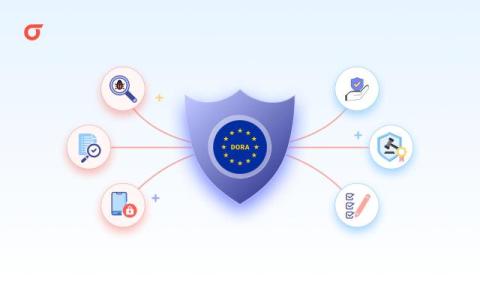
DORA compliance for mobile applications is the process of identifying, testing, and documenting mobile ICT risks in line with Regulation (EU) 2022/2554, covering Articles 8, 9, 10, 24, and 25, through vulnerability assessments, security testing, and audit-ready evidence generation that financial institutions can present to regulators, auditors, and internal governance bodies.