Security | Threat Detection | Cyberattacks | DevSecOps | Compliance

Dominate IoT data privacy: Strong safeguards for connected devices in 2026

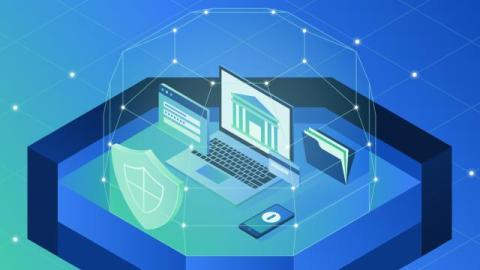
Everywhere you look, your wrist, your home, your car, smart devices quietly gather data. The Internet of Things (IoT) has evolved from a novelty into the backbone of daily life. From smart thermostats that learn your schedule to industrial sensors tracking performance in real time, connected devices are reshaping how we live, work, and interact. But with that progress comes peril. Each device represents a potential breach point; every upload, update, or firmware oversight can expose personal information.

Single-Tenant vs Multi-Tenant FedRAMP Deployments

Across the ecosystem of federal contractors, a majority of deployments tend to be relatively standard. 80% of them will be FedRAMP impact level Moderate, for example, and most will have a standard set of considerations and concerns, such that a lot of security controls can be automated. It’s those outliers that make FedRAMP challenging.

How Threat Intelligence Builds Shared Responsibility in Cybersecurity

Recent high-profile incidents, such as attacks in the retail sector or the closure of KNP following a devastating breach, have pushed cybersecurity onto the boardroom agenda. However, as it rises in visibility, a fundamental misunderstanding persists about how protection works. Responsibility for security is frequently concentrated on a few individuals.

What The New CMMC Rules Mean For DoD Contractors

If your organization does business with the U.S. Department of Defense, or plans to, you need to know about a major change that just went into force. CMMC, or Cybersecurity Maturity Model Certification, is the Department of Defense’s standard for ensuring contractors meet basic cybersecurity requirements. It was designed to protect sensitive government data across the entire defense supply chain. As of November 2025, CMMC is no longer optional.

Navigating Workspace Compliance: Best Practices for Enhanced Security

Staying compliant is essential for protecting your organization from unexpected costs and reputational damage. As regulations grow more complex, businesses must ensure consistent adherence to security and data protection standards. With the rise of hybrid and remote work, solutions like Acronis Protected Workspace provide a secure, controlled environment designed to help organizations meet evolving compliance needs with confidence.

From Compliance to Cyber Resilience: The Real-World Benefits of DLP

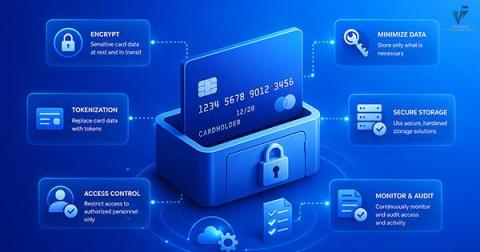
For many organizations, data loss prevention (DLP) has historically been viewed through the narrow lens of compliance. Regulations like PCI DSS, HIPAA, and GDPR forced companies to prove they had controls in place to protect sensitive information. DLP was the obvious answer—a way to prevent credit card numbers, Social Security information, or personal health data from leaving the organization in unauthorized ways. In that framing, DLP was deployed to satisfy audits, not reduce risk.

What Happens If You Lose Your FedRAMP Authorization?

We’ve talked a lot about the process a business goes through to achieve FedRAMP authorization and the ability to work with a government department or agency. What about the other side of the coin? What happens if you lose that authorization? Depending on how and why, the consequences can range from minimal to dire, so it’s important to know and be prepared.

Safeguarding Patient Data in Medical Transportation: Closing the Cybersecurity Gaps

Non-emergency medical transportation (NEMT) sits at the intersection of healthcare, logistics and information technology. While the core job seems simple-bring patients to medical appointments and take them home safely-it involves sensitive health data, GPS tracking, scheduling, billing and communication between dispatchers, drivers, facility staff and patients.

Ensuring API Testing Meets Compliance: Policies, Performance, and Proof

APIs sit at the center of modern applications. They move data between systems, power mobile apps, and enable integrations at scale. Naturally, they are also a focal point for regulators, auditors, and attackers. Most organizations today do test their APIs. Yet many still struggle during audits. Not because testing didn’t happen, but because it wasn’t consistent, governed, or provable. Compliance frameworks don’t ask whether you ran an API scan.

6 Ways to move from security questionnaires to self-serve trust

In this session of the Strategic CISOs webinar series, Sravish Sridhar (CEO, TrustCloud) sat down with Myke Lyons (CISO, Cribl) and Jon Zayicek (Customer Security Assurance Leader, Cribl) to break down how Cribl built a customer trust program that helps buyers self-serve proof, reduces questionnaire drag, and gives security a clear line of sight to pipeline and ARR. Cribl has turned customer assurance into a revenue accelerant, and that posture has produced great results.