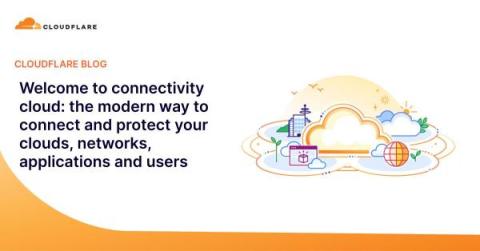
New Study Reveals Cloud Giants are Holding Businesses Captive
Independent study finds that 96% of respondents would find value in a connectivity cloud approach.


The best part of our job is the time we spend talking to Cloudflare customers. We always learn something new and interesting about their IT and security challenges. In recent years, something about those conversations has changed. More and more, the biggest challenge customers tell us about isn’t something that’s easy to define. And it’s definitely not something you can address with an individual product or feature.
As a senior consultant I deal with customers across numerous industries and maturity levels. I am often engaged in conducting risk assessments or gap analysis aligned with common frameworks such as the National Institute for Standards and Technology’s (NIST) Cybersecurity Framework (CSF). Most, if not all, the frameworks have a few controls that focus on the organization’s backup processes and disaster recovery plans.
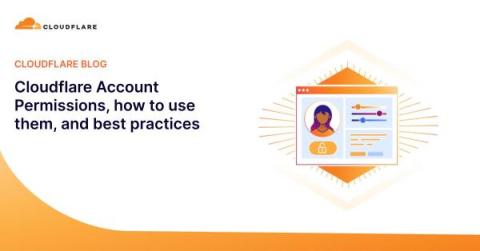
In the dynamic landscape of modern web applications and organizations, access control is critical. Defining who can do what within your Cloudflare account ensures security and efficient workflow management.
According to CSO the fines incurred for data breaches or non-compliance with security and privacy laws, for only a handful of companies, has cost $4.4 billion. The global average cost of a data breach in 2023 was $4.45 million, a 15% increase over 3 years (IBM). The challenge for organizations is how to safeguard sensitive information while adhering to the law, but without compromising innovation. Cyber threats loom large, affecting businesses in every industry.
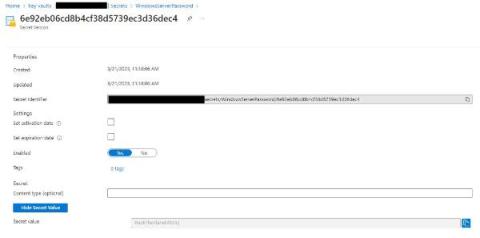
Build secure cloud-native applications by avoiding the top five security pitfalls we lay out in our Secure Cloud-native Development Series. This blog is the fifth and final part of the series, and it will teach you to handle credentials and secrets management best practices for securing cloud-native applications. Every organization has their way of managing credentials. In the past, with legacy application architectures, this was a bit more manual and arduous.
A typo is one of those common mistakes with unpredictable results when it comes to the Internet’s domain names (DNS). In this blog post we’re going to analyze traffic for exmaple.com, and see how a very simple human error ends up creating unintentional traffic on the Internet. Cloudflare has owned exmaple.com for a few years now, but don’t confuse it with example.com!
We are excited to announce an extended partnership between CrowdStrike and Cloudflare to bring together Cloudflare Email Security and CrowdStrike Falcon® LogScale. With this integration, joint customers who have both Falcon LogScale and Cloudflare Email Security can now send detection data to be ingested and displayed within their Falcon LogScale dashboard.