Security | Threat Detection | Cyberattacks | DevSecOps | Compliance

The Latest Cybersecurity News & Insights From Around The World


The Rise of AI and Deep Fakes: A Growing Threat to National Security | Razorthorn Security
Lisa Ventura highlights the increasing cybersecurity threats, including attacks on nation states and the rise of deep fakes. She also critiques how AI is often used as a marketing buzzword rather than real technological advancement.
SnykLaunch October 2024 Introduces Enhanced AI-Driven Security to Bolster Enterprise AppSec and DevSecOps Efforts
Latest Advancements Accelerate Secure Software Development and Safe AI Adoption.

Let's Converge: Copilot AI and the Steps to Transform Your Enterprise
Dona Sarkar, who goes by the title of chief troublemaker at Microsoft, explains how to effectively adopt Microsoft Copilot to stay competitive and unlock its full potential.
Why Presidio and Other Data Masking Tools Fall Short for AI Use Cases Part 1
Data privacy and security are critical concerns for businesses using Large Language Models (LLMs), especially when dealing with sensitive information like Personally Identifiable Information (PII) and Protected Health Information (PHI). Companies typically rely on data masking tools such as Microsoft’s Presidio to safeguard this data. However, these tools often struggle in scenarios involving LLMs/AI Agents.
Streamline SASE Operations with Skope AI-powered Cloud Orchestrator
This is the third blog in our series, where we embark on a journey of Branch Transformation with the Next Gen SASE Branch solution. Built on the Netskope One SASE platform, the Next Gen SASE Branch solution combines its three layers–Context-aware SASE Fabric, Zero Trust Hybrid Security, and a SkopeAI-powered Cloud Orchestrator–into a unified cloud offering.
How Businesses Using ChatGPT 4.1 Can Safely Bypass DPDP's Data Residency Bill
Until 2023, India’s data privacy landscape was largely unregulated – businesses didn’t have to worry about how they process and store data. Sensitive customer data like Personally Identifiable Information (PII) could travel around the world in 80 days and land back to its source – without violating a single regulation. While the unregulated digital space was a boon for data dependent businesses, it was a bane for customer privacy.
Sensitive Data Discovery Tools: Best Practices for GDPR, PII, and PCI Compliance
For most companies today, the question isn’t whether a data breach will occur, but rather when it will occur. This predicament is primarily due to the sheer volume of data, the challenges associated with monitoring sensitive data, and the transition to remote work. Consequently, IT security teams are constantly navigating a dynamic and enduring risk landscape, making it exceptionally challenging to maintain data security and implement effective sensitive data protection strategies.
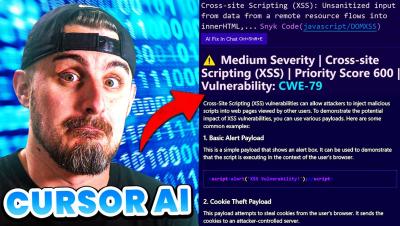
Exploiting Vulnerabilities in Cursor AI Code
In this video, we are testing the security of code generated by Cursor AI and we will be exploiting any vulnerabilities that are found in the code. This video is part 2 to our video titled 'Cursor AI: The VS Code Competitor' so be sure to check out that video first!

Enhancing Financial Solutions with Smart Payment Systems
Have you ever wondered how financial institutions are keeping up with the demands of today's digital world? Financial institutions are leading the charge by adopting innovative technologies. Among these advancements, smart payment systems are revolutionizing the financial landscape, making transactions faster, safer, and more convenient than ever before. These systems enhance user experience while streamlining operations, helping financial institutions reduce costs and improve efficiency.